ป้ายกำกับ: link analytics

  • Dub.co vs itlink.to: Which URL Shortener Is Better for App Marketing?

    Dub.co vs itlink.to: Which URL Shortener Is Better for App Marketing?

    A URL shortener for app marketing should not only make your link shorter. It should help the right user reach the right place without extra thinking. That sounds simple, but app campaigns often break in small ways. An iPhone user lands on a generic website. An Android user sees an App Store button first. A QR code points to an old landing page. A creator campaign gets clicks, but nobody knows which creator actually drove installs.

    That is the real reason teams compare Dub.co vs itlink.to. They are not only asking which tool makes cleaner links. They are asking which one helps an app campaign perform better after someone clicks.

    Dub.co is strong when your team needs advanced link management, attribution, conversion tracking, deep links, A/B testing, and partner campaign workflows. itlink.to is more practical for teams that want short links, QR codes, app store routing, hub links, and simple analytics in one place. Both can be useful, but they solve different levels of the same problem.

    Start With the App Click Journey, Not the Link

    The biggest mistake in app marketing is treating the short link as the campaign. A short link is only the door. The real question is what happens after someone opens it.

    Imagine someone sees your app on TikTok. They tap the link from your bio. If they are on iPhone, they expect the App Store. If they are on Android, they expect Google Play. If they are on desktop, they may need a web page, email capture, or QR code to continue later on mobile.

    A basic short link can make the URL look better, but it may still send everyone to the same destination. That creates unnecessary friction. Users may need to choose their device, scroll through a landing page, or search for the right button. Every extra step gives them a reason to stop.

    For app marketing, the better short link is not always the shortest one. It is the one that keeps the user moving. If the link understands the campaign context, the device, and the destination, it becomes part of the conversion journey instead of just a neat-looking URL.

    Dub.co vs itlink.to for URL Shortener for App Marketing

    When comparing Dub.co vs itlink.to for a URL shortener for app marketing, the main difference is complexity. Dub.co is built for teams that want more control over link performance. It is a good fit when clicks need to connect with conversions, customers, partners, or revenue.

    itlink.to is built for teams that want to launch cleaner app marketing links without building a complicated tracking system first. It works well when your campaign needs short links, QR codes, app store routing, bio links, and analytics, but your team still wants the workflow to feel simple.

    For example, a growth team running paid partnerships may prefer Dub.co because attribution depth matters. They may need to know which creator drove signups, which link created revenue, or which campaign version performed better.

    A smaller app team may care about a different problem. They may need one clean campaign link for Instagram, one QR code for print material, one app download link for paid ads, and one link page for a bio. In that situation, itlink.to may feel more direct because the everyday link jobs are easier to manage together.

    The right choice depends less on brand name and more on campaign maturity. If your app marketing is already attribution-heavy, Dub.co makes sense. If your app marketing still needs cleaner links and smoother routing, itlink.to may be the more useful starting point.

    Where Dub.co Is Strong

    Dub.co is strongest when links are part of a serious growth system. If your team already tracks campaigns deeply, tests landing pages, manages partners, or connects clicks to conversions, Dub.co gives you more advanced tools.

    This matters for apps with multiple acquisition channels. A SaaS app may run paid ads, influencer campaigns, newsletter sponsorships, product launches, and referral programs at the same time. In that case, the team may not only ask, “How many clicks did we get?” They may ask, “Which link drove signups?” or “Which partner created paying users?”

    Dub.co is also useful for teams with technical resources. Developers and technical marketers can use more advanced link workflows, custom domains, APIs, and deeper tracking setups. That flexibility can be valuable when link creation is part of a larger marketing system.

    But this strength can also be too much for some teams. If you only need clean app campaign links, simple click data, QR codes, and device routing, a larger attribution setup may feel heavier than necessary. The tool is powerful, but power only matters if your team will actually use it.

    Where itlink.to Fits Better

    itlink.to fits teams that want links to be practical, fast, and easy to understand. This is especially useful for app teams that do not want to manage one tool for short links, another for QR codes, another for app routing, and another for a link-in-bio page.

    A common app campaign may need several link types at once. You might need a short link for social ads, a QR code for a booth poster, a one-link app download route for iOS and Android users, and a hub page for people who want to explore before downloading. itlink.to makes sense when these are everyday needs, not advanced side cases.

    The value is in reducing tool switching. A marketer should not need a technical setup every time they want to promote a new feature, app update, launch campaign, or seasonal offer. They should be able to create the link, share it, update it if needed, and check the results.

    That is why itlink.to Short Link works well as a soft starting point for app campaigns. You can create a clean, trackable campaign URL, then connect it with app routing, QR code sharing, or a hub link when the campaign needs more context.

    The App Download Problem Most Teams Ignore

    Many app teams think the download journey is obvious. Put the App Store button and Google Play button on a page, then send people there. But users do not always behave that neatly.

    Someone on Instagram may not want to read a landing page. They may just want the store. Someone scanning a QR code from a poster may be standing in a busy place. Someone clicking from an email on desktop may not be ready to install immediately, but they might scan a QR code or send the link to their phone.

    This is where one destination is rarely enough. A strong app marketing link should handle different situations without making the campaign messy. It should help mobile users get to the right store and help desktop users continue the journey in a useful way.

    Dub.co can support more advanced link behavior depending on setup. itlink.to is easier to understand for this specific app download use case because One Route is built around sending users to the right destination based on device. That is a practical advantage for teams that care more about reducing download friction than building a complex attribution model.

    If your campaign loses users between click and store visit, improving the route may matter more than adding another analytics dashboard.

    What App Marketers Should Compare Before Choosing

    Do not compare Dub.co and itlink.to only by counting features. Compare them by the moments where your app campaign can lose users or lose data.

    • Device routing: Can iOS, Android, and desktop users land in the right place without extra steps?
    • QR code usage: Can you create and track QR codes for offline campaigns, events, flyers, packaging, or table cards?
    • Editable destinations: Can you change the destination after the link or QR code has already been shared?
    • Campaign analytics: Can you see enough data to understand which channel, device, or location is getting attention?
    • Branded links: Can your campaign use a clean domain and readable slug that looks trustworthy?
    • Team workflow: Can non-technical teammates create and manage links without asking a developer every time?
    • Advanced attribution: Do you need conversion tracking, partner tracking, affiliate links, or revenue-level reporting?

    The last point is important. If you need attribution, Dub.co may be the stronger choice. If you need cleaner execution across short links, QR codes, app routing, and bio links, itlink.to may be easier to use day to day.

    Practical Campaign Scenarios

    For a simple app launch, itlink.to is often enough. You can create a clean short link for the launch announcement, use a QR code for offline material, and route users to the right app store. The team can check click performance without setting up a complicated system.

    For an influencer campaign, the answer depends on depth. If you only need a different short link for each influencer and basic click tracking, itlink.to can work well. If you need to track conversions, reward partners, or connect each creator to revenue, Dub.co becomes more attractive.

    For a restaurant, hotel, travel, fitness, or booking app, the link journey usually needs to be simple. People are often clicking from social media, scanning a QR code, or opening a message from a friend. In these cases, the best link is the one that gets them to the app or booking page quickly.

    For a SaaS or fintech app, attribution may be more important. Teams may need to understand which campaign created signups, trials, subscriptions, or paid customers. In that case, Dub.co’s deeper marketing features can justify the extra setup.

    For a printed QR code campaign, editable destinations are critical. If you print a QR code on posters, receipts, brochures, or packaging, you do not want to reprint everything when the app page changes. Both tools can support link management, but the better choice depends on whether you need simple updating or deeper attribution after the scan.

    Common Mistakes That Make Short Links Underperform

    A short link can still fail if the campaign behind it is weak. Many teams create clean links but forget to make the journey clear.

    One mistake is using the same destination for every user. This is common in app campaigns. Everyone gets sent to the homepage, then users must find the correct store button. That may seem acceptable, but it adds friction at the exact moment when interest is highest.

    Another mistake is creating campaign links with unclear names. A team may create links like /summer, /launch, /ad1, and /test without a naming system. After a few weeks, nobody remembers which link belongs to which campaign. Analytics becomes harder to trust.

    Some teams also forget offline tracking. If your app is promoted at events, restaurants, retail locations, coworking spaces, or hotels, QR codes should not be treated as decoration. They should be tracked like any other campaign link.

    The biggest mistake is choosing the wrong level of tool. A small app team may buy a complex attribution platform and use only basic short links. A larger growth team may stay with a basic shortener and miss conversion data. Both situations create waste. The right tool should match the team’s current marketing stage.

    Which One Should You Choose?

    Choose Dub.co if your team needs a more advanced link management system. It is the better fit when your app marketing depends on conversion tracking, affiliate campaigns, partner links, deep links, A/B testing, APIs, custom domains, and detailed attribution.

    Choose itlink.to if your team needs a simpler way to manage practical app marketing links. It is the better fit when your main needs are clean short links, app store routing, QR codes, hub links, and clear click analytics in one dashboard.

    • Choose Dub.co when you need attribution depth.
    • Choose itlink.to when you need campaign simplicity.
    • Choose Dub.co when partner or affiliate tracking is central.
    • Choose itlink.to when short links, QR codes, and app routing are the daily workflow.
    • Choose Dub.co when your team has technical marketing resources.
    • Choose itlink.to when marketers, founders, or small teams need to move quickly.

    The choice should come from your real bottleneck. If you already get plenty of clicks but cannot connect them to conversions, Dub.co may solve the bigger problem. If users are landing in the wrong place, your QR campaigns are hard to manage, or your app links are spread across too many tools, itlink.to may be the more practical answer.

    Final Verdict: The Better URL Shortener for App Marketing

    The better URL shortener for app marketing is the one that improves the full click journey, not just the appearance of the URL. Dub.co is a strong choice for advanced growth teams that need attribution, conversion tracking, partner workflows, deep links, and more technical control.

    itlink.to is a strong choice for app teams that want cleaner campaign execution. It helps with the practical link problems app marketers face every day: short links that look better, QR codes that are easier to share, app routing that reduces friction, hub links that organize destinations, and analytics that are simple enough to use.

    If your campaign is built around advanced attribution, Dub.co may be the better fit. If your campaign is built around getting users from click to download with less confusion, itlink.to may be the better fit.

    Start with the problem closest to the user. If people click but do not reach the right destination, fix the route. If your team cannot understand which campaign is working, improve tracking. If your links are messy across social, ads, QR codes, and app stores, simplify the system.

    Create a cleaner app campaign link with itlink.to Short Link and make every click easier to track, share, and route.

    References

  • Free Link Tracking Tool for Marketing Campaigns

    Free Link Tracking Tool for Marketing Campaigns

    A free link tracking tool helps marketers answer one of the most important campaign questions: which links are actually working? Not which page received traffic. Not which platform looked busy. Not which post got likes. The real question is which link made someone interested enough to click.

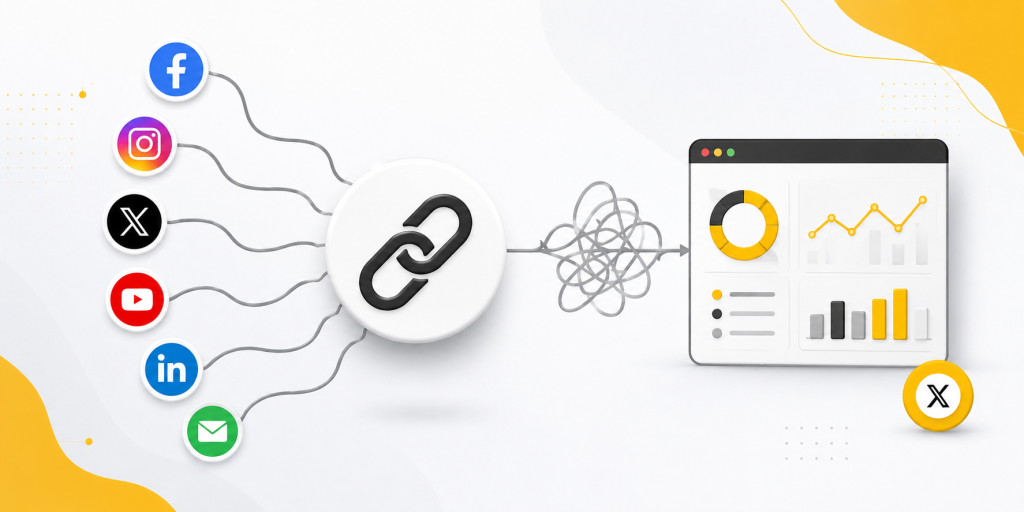
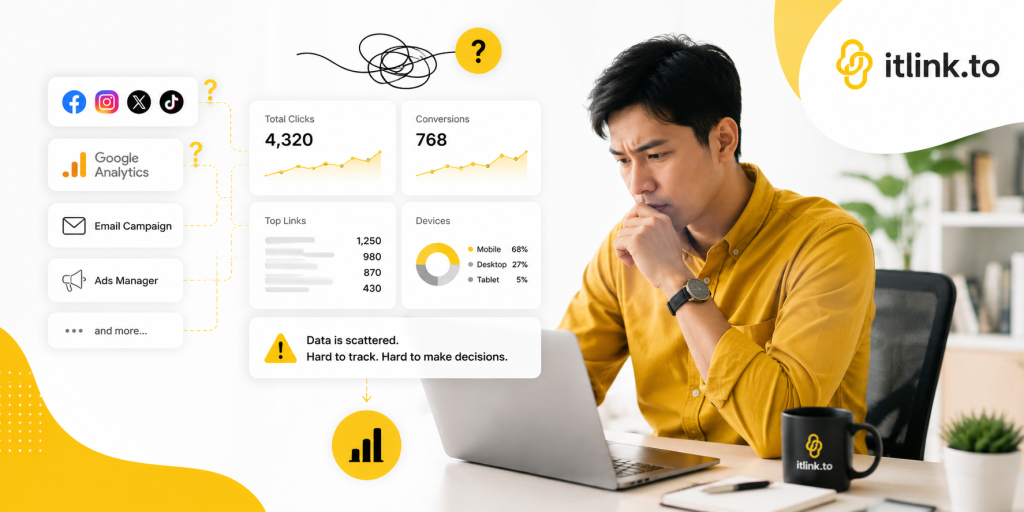
    This matters because many marketing reports look clear at first, but become confusing when you look closer. A campaign may get traffic from email, LinkedIn, Instagram, paid ads, QR codes, partners, and creators at the same time. If every channel uses the same destination link, your report cannot clearly show what created the result.

    A free link tracking tool solves this by giving each campaign placement its own measurable link. Instead of guessing whether a newsletter, ad, QR code, or social post worked, you can compare click performance directly. This helps you improve campaigns faster, spend budget more carefully, and avoid repeating weak marketing ideas.

    Your campaign report is often wrong before anyone visits the website

    Most marketers check analytics after traffic reaches the website. That is useful, but it does not show the full campaign story. A user made a decision before landing on your page. They saw a link somewhere and decided whether it looked worth clicking.

    That click may have started from a newsletter button, a LinkedIn post, a TikTok bio, a QR code on a flyer, a partner article, or a paid ad. If all of those placements use the same URL, your analytics may show traffic, but the source story becomes incomplete.

    This creates a reporting problem. The campaign looks like it generated traffic, but you cannot clearly say which link created attention. You may think the campaign worked because total visits increased. In reality, one channel may have carried the whole campaign while the others did almost nothing.

    Link tracking fixes this earlier in the journey. It measures the click before the visitor reaches the destination. That gives your team a cleaner view of channel performance and campaign interest.

    Free link tracking tool for cleaner campaign attribution

    A free link tracking tool is useful because it separates campaign performance by link, not just by landing page. This is important when several channels send traffic to the same destination.

    For example, your team may promote one landing page through five channels. Email may use one tracked link. LinkedIn may use another. A QR code may use a third. An influencer may use a fourth. Paid ads may use a fifth. All links can point to the same page, but each one produces separate click data.

    This makes attribution easier to understand. You can see which placement attracted attention, which channel underperformed, and which message deserves another test. You are no longer relying only on one combined traffic number.

    The goal is not to create complicated reports. The goal is to make campaign data easier to trust. When each important placement has its own link, your team can review performance without guessing where clicks came from.

    The mistake of using one link across every channel

    One of the biggest campaign tracking mistakes is using the same link everywhere. It feels simple at first. One destination, one link, one campaign. But this simplicity creates weak reporting.

    Imagine you promote a new offer through email, Instagram, LinkedIn, a paid ad, and a QR code. If every channel uses the same link, your total click number may look fine. But you will not know which channel created those clicks. That means you cannot confidently improve the next campaign.

    This can lead to bad decisions. You may keep posting on a channel that did not drive clicks. You may reduce budget from a channel that quietly performed well. You may assume a message was strong when only one placement created interest.

    A better approach is to create a separate tracked link for each meaningful channel. The destination can stay the same, but the link data should be separate. This gives you a clearer view of campaign performance without changing the landing page.

    What link tracking can show before conversion data is ready

    Conversion data is important, but it is not always available quickly. Some campaigns need time before users sign up, book a demo, buy, or download an app. Link tracking gives you earlier signals.

    A click does not prove success, but it shows interest. If a campaign gets very few clicks, the problem may be the message, offer, channel, audience, or placement. If a link gets many clicks but few conversions, the landing page or offer may need work.

    This distinction is useful. Without link-level data, teams often blame the wrong part of the campaign. They may rewrite the landing page when the real problem was that no one clicked the post. Or they may change the ad creative when the real problem was a weak signup page.

    Link tracking helps separate attention problems from conversion problems. First, did people click? Then, did they continue after landing? These are different questions, and they need different fixes.

    Campaign links worth tracking separately

    Not every link needs its own report. The best links to track are the ones that help you make better campaign decisions. Focus on links tied to channels, audiences, messages, or placements you may want to compare.

    • Email newsletter link: Track clicks from each email campaign or CTA.
    • Social post link: Compare LinkedIn, Instagram, X, Facebook, TikTok, or Threads.
    • QR code link: Measure offline interest from events, flyers, packaging, menus, or posters.
    • Influencer link: Give each creator a separate tracked link.
    • Partner link: Track each newsletter, blog post, community, or affiliate mention.
    • Paid ad link: Separate campaigns, ad groups, creatives, or offers.
    • Webinar link: Compare registration clicks from email, social, ads, and partners.
    • App campaign link: Track app download interest from different channels and devices.

    The rule is simple. If you will use the data to compare performance, create a separate tracked link. If the data will not change any decision, do not overcomplicate it.

    Why clicks can be useful and misleading at the same time

    Clicks are helpful, but they can be misleading when viewed alone. A campaign with many clicks may still perform poorly if those visitors do not take action. A campaign with fewer clicks may be more valuable if those visitors convert at a higher rate.

    For example, a viral social post may drive many curious clicks but few signups. A small partner newsletter may drive fewer clicks but stronger leads. If your team only celebrates total clicks, you may reward the wrong campaign.

    This is why link tracking should be read together with landing page data. Use link tracking to understand where attention came from. Use website analytics to understand what happened after the click. Use conversion data to judge business impact.

    The best marketing reports do not stop at “this link got clicks.” They ask better questions. Did the right audience click? Did those users continue? Did the channel bring meaningful traffic? Should we repeat this campaign, change the message, or stop using that placement?

    UTM tracking and short links should work together

    UTM parameters are useful because they help analytics tools identify campaign traffic. They can show source, medium, campaign name, content, and other details. The problem is that UTM links often look long and messy when shared publicly.

    A campaign URL with full UTM tracking may be useful for analytics, but poor for user experience. It can look confusing in social posts, emails, SMS messages, and printed materials. Users do not need to see the tracking structure. They only need a clear link that feels safe to click.

    This is where tracked short links help. The public link can stay clean, while the final destination still includes UTM parameters. Your users see a simple link. Your analytics still receive campaign data.

    This setup gives marketers the best of both sides. Short tracked links improve clarity before the click. UTM parameters improve reporting after the click. Together, they create a cleaner campaign workflow.

    How to organize links so reports stay readable

    Link tracking only works well when links are organized. If every team member names links differently, the data becomes messy again. A simple naming system can prevent this.

    Use link names that describe the campaign and channel. For example, a launch campaign could use separate links for /launch-email, /launch-linkedin, /launch-qr, and /launch-partner. This makes the report easier to understand later.

    Keep evergreen links separate from campaign links. Evergreen links are used often, such as /demo, /pricing, /app, or /contact. Campaign links are tied to a specific promotion, event, launch, or test. Mixing both together makes your link library harder to manage.

    Also assign ownership. Someone should know why the link exists, where it points, and whether it should be updated later. This is especially important for QR codes, old emails, and partner campaigns because those links can continue receiving clicks long after the campaign ends.

    Good link organization is not about being strict. It is about making future reports easier to read.

    Where a free link tracking tool fits in the marketing workflow

    A free link tracking tool should fit between campaign planning and campaign reporting. Before launching, create links for the channels you want to measure. During the campaign, watch early click signals. After the campaign, compare link performance with website and conversion data.

    This workflow helps teams move from vague reporting to clearer decisions. Instead of saying, “The campaign got traffic,” you can say, “Email drove the most clicks, LinkedIn had the strongest early response, the QR code was weak, and the partner link brought fewer but higher-quality visitors.”

    For small teams, this can make campaign review much more practical. You do not need a complex analytics setup to start learning. You need clean tracked links that answer real campaign questions.

    For teams that want to create cleaner marketing links, track clicks, and manage campaign destinations more easily, itlink.to can be used as a practical link tracking option for campaign workflows: https://itlink.to/#hub-link

    The main value is not only shortening the link. It is making every campaign link easier to measure and easier to improve.

    Free link tracking tool conclusion for smarter campaign decisions

    A free link tracking tool helps marketers stop guessing which campaign links are working. It gives each important channel, placement, or message its own measurable link, so your team can compare performance with more confidence.

    The strongest campaign reports start before the website visit. They show where the click came from, which link created interest, and which placements deserve more attention. This makes it easier to find weak channels, improve messages, and avoid wasting budget on campaigns that only look successful on the surface.

    Clicks are not the full story, but they are an important first signal. When you combine link tracking with UTM data, website analytics, and conversion results, your campaign reports become much clearer.

    A good campaign should not end with “we got traffic.” It should end with a better understanding of what worked, what failed, and what to test next.

    References

  • Bitly vs itlink.to: Which URL Shortener Is Better for Marketing?

    Bitly vs itlink.to: Which URL Shortener Is Better for Marketing?

    Bitly vs itlink.to is not only a question about which tool makes shorter links. For marketers, creators, startups, and app teams, the better question is which tool makes campaigns easier to launch, track, and improve.

    A short link is often the first step in a marketing journey. It may appear in an Instagram bio, email campaign, paid ad, QR code, product launch post, YouTube description, podcast note, or app download page. If that link is hard to manage, hard to edit, or hard to measure, the campaign becomes harder to improve.

    Bitly is a well-known URL shortener with a large platform around links, QR codes, analytics, and landing pages. itlink.to is a simpler option for teams that want clean short links, smart links, and practical campaign routing without making link management feel heavy.

    The Wrong Question: “Which One Shortens Links Better?”

    Both Bitly and itlink.to can help turn long URLs into cleaner short links. That part is not the real decision.

    The real decision is about workflow.

    A marketer does not only need a short link. They need to know where the link will be shared, whether it can be edited later, how traffic will be measured, and whether the team can understand the results without digging through a complicated dashboard.

    If your only goal is to shorten one random URL, many tools can do that. But if the link supports a campaign, the tool needs to do more than hide a long address.

    A marketing link should help answer three questions: Where should this click go? Can we change it later? Did the campaign work?

    When Bitly Makes Sense

    Bitly makes sense for teams that want a mature, widely known link management platform. It is especially useful when a company needs link shortening, QR codes, landing pages, redirects, analytics, branded links, and team workflows inside one larger platform.

    This can be a good fit for larger marketing teams, enterprises, agencies, and companies that already need structured link operations.

    If your team wants advanced reporting, higher link volume, custom domains, integrations, and a familiar brand name, Bitly may be the safer choice. It has been in the market for a long time, and many marketers already understand what a Bitly link is.

    The tradeoff is that not every small team needs that much platform depth. A stronger tool can still feel bigger than the job when the job is simply creating clean, editable campaign links.

    When itlink.to Feels More Practical

    itlink.to is a better fit when the main goal is speed and simplicity.

    A founder launching a product does not always want to configure a large link management system. A creator promoting a new offer does not want to spend too much time building tracking logic. An app team sharing a download campaign may only need a clean short link that routes users clearly.

    This is where a lighter workflow helps.

    itlink.to is useful when you want short links, smart links, creator links, app routing, and simple campaign destinations in one clean setup. The tool is not trying to make every link feel like a complex attribution project.

    That matters because many teams do not fail because they lack link features. They fail because their link workflow becomes messy, inconsistent, or too slow to use every day.

    The Campaign Link That Gets Shared Everywhere

    A single marketing link rarely stays in one place.

    You may create one launch link and share it across Instagram, TikTok, LinkedIn, email, QR codes, YouTube, communities, and paid ads. The problem starts when every channel needs a slightly different version.

    For example, Instagram traffic may need a mobile-first landing page. Email traffic may need a product page. QR code traffic may need an event-specific page. App users may need App Store or Google Play routing.

    If every link is created manually with no system, reporting becomes messy fast.

    Bitly gives teams more advanced link and QR management options. itlink.to is better for teams that want a simpler way to create marketing links without overbuilding the process.

    The right choice depends on how complex your campaign actually is.

    Editable Links Are Not a Bonus Feature

    Editable links become important the moment a link is published somewhere difficult to change.

    A social post can sometimes be edited. A QR code on printed material cannot. A podcast description may stay online for years. A PDF may be downloaded and shared many times. A newsletter link cannot be changed after the email is sent.

    If the destination changes, the public link should not become useless.

    This is why editable destinations matter for marketing. They give your campaign a second chance when a landing page changes, a promotion expires, or a product page moves.

    For small teams, this is one of the most practical reasons to use a better URL shortener. It prevents small mistakes from becoming permanent campaign problems.

    The Analytics Problem Most Marketers Actually Have

    Many marketers do not need complicated analytics at the beginning. They need clear answers.

    Which link got clicks? Which channel performed better? Did the QR code work? Did the social post drive traffic? Did the campaign improve after changing the destination?

    Bitly is strong if your team wants more detailed analytics and reporting across a larger link ecosystem. itlink.to is stronger when you want a simpler way to understand link performance without turning every campaign into a reporting project.

    The best analytics tool is not always the one with the most charts. It is the one your team checks regularly.

    If the dashboard is too heavy, people stop using it. If the data is too thin, decisions become guesses. The right balance depends on your team size and campaign style.

    Bitly vs itlink.to for Real Marketing Use Cases

    Here is a practical comparison based on common marketing situations:

    Marketing NeedBitlyitlink.to
    Basic short linksStrongStrong
    QR code campaignsStrongUseful for simple campaigns
    Large team link managementStronger fitBetter for smaller teams
    Simple campaign linksGoodStrong
    Advanced analyticsStronger fitSimpler tracking
    Editable destinationsAvailable depending on setupUseful for campaign flexibility
    Creator and bio link use casesAvailable through Bitly PagesStrong fit
    App routing and smart link use casesMore advanced setup may be neededStrong fit
    Fast setup for small teamsCan be more than neededStrong
    Enterprise link operationsStronger fitNot the main use case

    This is not a “Bitly is bad” comparison. Bitly is a powerful platform.

    The point is simpler: not every marketing team needs a large platform to manage simple campaign links.

    The Hidden Cost of Choosing the Heaviest Tool

    A tool can be powerful and still create friction.

    If your team only needs ten campaign links per month, an advanced platform may feel like too much. People may avoid it, create links inconsistently, or use raw URLs instead.

    That creates link sprawl.

    One person uses a short link. Another person uses the full landing page URL. Someone else adds UTM parameters manually. A designer creates a QR code with a static URL. Later, nobody knows which link performed best.

    A simpler link workflow can prevent this. When link creation is fast and easy, the team is more likely to use the same process every time.

    Consistency often matters more than feature depth.

    The Better Choice Depends on Your Marketing Stage

    Bitly is a strong choice if your team needs a mature platform for links, QR codes, branded domains, landing pages, integrations, and advanced reporting.

    itlink.to is a strong choice if your team wants a simpler URL shortener for marketing links, smart links, creator links, app links, and campaign destinations without adding unnecessary complexity.

    For early-stage startups, creators, solo marketers, and small teams, simplicity can be a real advantage. You can create links faster, test campaigns quickly, and avoid overbuilding your marketing stack.

    For larger teams with strict reporting, brand governance, multiple users, and advanced analytics needs, Bitly may be the better fit.

    The best URL shortener is the one that matches how your team actually works.

    Final Verdict: Bitly vs itlink.to for Marketing

    Bitly vs itlink.to comes down to depth versus simplicity.

    Choose Bitly if you want a bigger, more established link management platform with advanced marketing infrastructure.

    Choose itlink.to if you want a cleaner, simpler way to create short links and smart marketing links for campaigns, creators, products, apps, and landing pages.

    For many marketing teams, the goal is not to manage links like a large enterprise. The goal is to publish faster, keep links editable, track performance clearly, and send people to the right place.

    If that sounds like your workflow, try itlink.to’s short link tool here:

    https://itlink.to/#short-link

    Start with one campaign. Create separate links for your most important channels. Test the destinations. Share them. Then use the results to make your next campaign better.

    References

  • How to Track Clicks on a Short URL

    How to Track Clicks on a Short URL

    A short URL is easy to share, but the real value starts after someone clicks. If you know how to track clicks on a short URL, you can see which campaigns get attention, which channels bring useful visitors, and which links are not worth promoting anymore.

    The mistake many teams make is treating click count as the whole story. A link with 5,000 clicks may look successful, but those clicks may come from bots, the wrong country, repeat visitors, or people who leave immediately. Good click tracking helps you look past the big number and understand what is really happening.

    Start With the Question You Want the Link to Answer

    Before creating a short URL, decide what you want to learn from it. A short link for an Instagram bio should answer a different question than a short link on a QR code, email campaign, influencer post, or paid ad.

    For example, an Instagram bio link might answer, “Are profile visitors clicking through to our offer?” A QR code might answer, “Did people at this event scan the poster?” An influencer link might answer, “Did this creator send real traffic or just views?”

    When the goal is clear, the tracking setup becomes easier. You know what to name the link, where to place it, and which numbers matter.

    How to Track Clicks on a Short URL

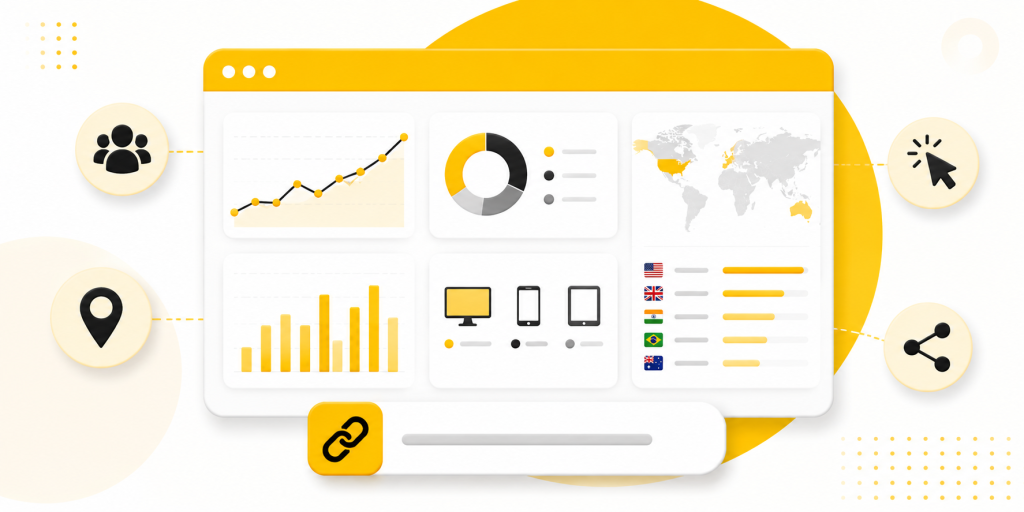
    To track clicks on a short URL, create the link with a URL shortener that includes analytics. After the link is shared, the tool records click activity and shows you data such as total clicks, unique clicks, device type, country, referrer, and time of click.

    The basic process is simple. Add your destination URL, create a short link, share it in your campaign, then review the click analytics. If you are running multiple campaigns, create separate tracked short URLs for each one.

    This matters because one shared link across every platform creates unclear data. If Instagram, TikTok, email, and QR codes all use the same short URL, you may know the total clicks, but you will not know which channel caused them.

    Total Clicks Are Useful, But Not Enough

    Total clicks are the easiest number to understand. They show how many times the short URL was clicked. But total clicks can be misleading if you look at them alone.

    A link may get many clicks because one person opened it repeatedly. It may get traffic from bots or preview crawlers. It may spike because a social app scanned the link before showing a preview. It may also get low-quality clicks from the wrong audience.

    That does not mean click count is useless. It is a starting point. But you should compare it with unique clicks, referrers, devices, locations, and conversion behavior before deciding whether the campaign worked.

    Track Each Channel Separately

    If you want useful data, avoid using one short URL everywhere. Create different links for different channels, even if they all point to the same destination.

    For example, create one short link for Instagram bio, one for TikTok profile, one for newsletter, one for QR posters, and one for each creator campaign. This gives you cleaner reporting.

    A practical naming structure might look like this: campaign name, channel, placement, and date. You do not need a complicated system. You just need enough detail so you can understand the report later without guessing.

    What Short URL Analytics Can Tell You

    Good short URL tracking can reveal patterns that are easy to miss.

    You may learn that:

    • Instagram gets more clicks, but email brings more serious visitors
    • QR codes perform well at events but poorly on printed flyers
    • Android users click more than iPhone users for a certain campaign
    • Most clicks happen within the first 24 hours after posting
    • A creator sends traffic, but most visitors never reach the final offer
    • One country is driving clicks even though the campaign targets another market

    These insights help you adjust campaigns while they are still active, not after the budget is gone.

    Use UTM Parameters for Deeper Tracking

    Short URL analytics tells you what happened at the link level. UTM parameters help your website analytics understand where visitors came from after they arrive.

    For example, you can add UTM tags for source, medium, campaign, and content. A short URL can hide the long UTM link, so users see a clean URL while your analytics still receives campaign data.

    This is useful when you want to connect short link clicks with website behavior. You can compare clicks from the short URL tool with sessions, signups, purchases, app downloads, or form submissions inside your analytics platform.

    Watch for Click Data That Looks Too Perfect

    Not every click is a real person with real intent. Some clicks come from bots, security scanners, messaging app previews, social media crawlers, or internal team testing.

    A sudden burst of clicks from one location, clicks with no follow-up behavior, or unusually high activity right after sending an email may need a closer look. The same applies when click numbers in your short URL tool do not match website analytics.

    The goal is not to remove every strange click. That is rarely possible. The goal is to avoid making big decisions from one surface-level number.

    Short Links Work Better When the Destination Matches the Click

    Tracking is only useful if the destination makes sense. If someone clicks a short URL from an Instagram Story about a discount, they should not land on a generic homepage. If they scan a QR code at an event, they should not have to search for the page mentioned on the poster.

    A good short URL connects the promise of the campaign to the right destination. That could be a product page, app download page, booking form, link in bio page, event page, or limited-time offer.

    This also makes your analytics easier to read. If the link and destination are aligned, weak performance is easier to diagnose.

    A Simple Click Tracking Setup for Real Campaigns

    For a real campaign, start with one clear destination and create separate short URLs by placement. Add UTMs when the traffic goes to your website. Use clear names so you can compare results later.

    For example, if you are launching a mobile app, you might create separate short links for Instagram bio, TikTok bio, creator posts, email newsletter, and QR posters. Each link can send users to the same download page, but the analytics will show which placement created the most interest.

    With itlink.to, you can create trackable short links for campaigns and keep your URLs clean while still understanding how people click. This is useful when you want one simple link for users but better reporting for your marketing team.

    Turn Short URL Clicks Into Better Decisions

    When you track clicks on a short URL properly, you stop guessing. You can see which channels deserve more attention, which campaigns need better messaging, and which links are getting clicks without real follow-through.

    The key is to create links with a purpose. Separate your channels, use UTMs when needed, check more than total clicks, and compare link data with real business outcomes.

    Start with one campaign. Create a clean short URL, track the clicks, review the data, and improve the next campaign based on what people actually did.

    References

  • Bitly vs itlink.to: Which Is Better for Smart Links and Analytics?

    Bitly vs itlink.to: Which Is Better for Smart Links and Analytics?

    People compare Bitly vs itlink.to for more than short links. They want to know which tool helps their campaign work better after the click. They want to know which tool will help their campaign work better after someone clicks. A short link is useful, but today’s campaigns often need more than that. You may need one link for different devices, one QR code for offline marketing, one bio link for several destinations, or simple analytics that show which channel is actually getting attention. Bitly is already a well-known name in link management, while itlink.to focuses on practical smart routing, clean link pages, QR code use cases, and easy tracking for businesses, creators, and app campaigns. The better choice depends on whether you mainly need a general link shortener or a smarter link experience that helps people reach the right place with less friction.

    Bitly vs itlink.to: Start With the Click Journey

    The best way to compare Bitly vs itlink.to is to look at the full click journey. Do not judge only the short link. What happens after someone taps your Instagram bio link? What happens after they scan your QR code? What happens after they click your campaign URL? If they land on the wrong app store, the campaign loses momentum. The same thing happens with a messy landing page or outdated link list. Bitly works well when you need a trusted short link and tracking system. itlink.to makes more sense when the link needs to guide users more clearly.

    A Short Link Is Not Always a Smart Link

    A short link mainly makes a URL cleaner and easier to share, but a smart link helps decide where the user should go. That difference matters when your audience comes from different devices, platforms, and campaign sources. For example, a mobile app campaign should not make users choose between two separate app store links. A creator should not need to change their bio link every time they post a new product, booking page, or promotion. A small business should not print several QR codes when one smart QR journey can feel easier for the customer. If the link only looks clean but still creates confusion after the click, it is not solving the real problem.

    Analytics Should Make the Next Campaign Easier

    Analytics are not valuable just because they show numbers. They are valuable when they help you understand what to do next. A dashboard full of clicks, locations, referrers, and devices can look impressive, but the real question is simple: which link worked, where did traffic come from, and did users reach the right destination? Bitly is strong for teams that want established link analytics across many campaigns. itlink.to is useful when you want straightforward tracking connected to practical actions, such as seeing how a QR campaign performs, checking whether a short link gets clicks, or understanding which smart route is being used most.

    Where Bitly Is Strongest

    Bitly is strongest when you want a familiar link management platform with a long-standing reputation. It is a good fit for teams that already manage many short links, need branded domains, want QR code creation, and prefer a platform that many marketers already know. For larger teams, Bitly can feel safe because it is widely recognized and built around structured link management. The possible downside is that a broad platform can sometimes feel heavier than necessary if your main goal is simple smart routing, app store redirection, or a clean campaign link that non-technical people can manage easily.

    Where itlink.to Makes More Sense

    itlink.to makes more sense when your campaign needs a clear destination flow instead of just a shorter URL. For example, a startup promoting a new app can use one smart link instead of asking users to choose between App Store and Google Play. A creator can use one bio link page instead of constantly replacing links in their profile. A café, salon, gym, or local business can use one QR code on printed material and still track clicks without making the campaign feel complicated. This is where itlink.to feels more direct: it focuses on helping the user get to the right place quickly, while keeping the setup easy for the business. You can explore its smart routing use case here: https://itlink.to/#one-route

    Practical Campaign Examples

    The difference becomes clearer in real campaigns. If you are sharing a monthly newsletter link, Bitly may be enough because everyone goes to one page. If you are promoting a mobile app, itlink.to may be more useful because users may need different destinations depending on their device. If you are running a QR campaign on flyers, packaging, or posters, the best link is not just the shortest one; it is the one you can track, update, and trust after the material is printed. If you are a creator using Instagram, TikTok, or YouTube, one clean link page can reduce DMs from followers asking where to buy, book, or find the latest offer.

    Common Mistakes When Comparing Link Tools

    Many people compare link tools by checking feature lists, but that can lead to the wrong choice. A tool may have many features and still not match the way your campaign actually works. Before choosing between Bitly and itlink.to, it is better to check the real use case:

    • Do you only need to shorten one URL?
    • Do users need different destinations based on device?
    • Are you using QR codes in offline marketing?
    • Will the destination need to change later?
    • Do you need a link-in-bio page with multiple actions?
    • Will your team actually understand and use the analytics?
    • Is the setup simple enough to repeat for future campaigns?

    Which Tool Is Better for Smart Links and Analytics?

    For broad link management, Bitly is the stronger known brand. For simple smart routing and practical campaign flows, itlink.to may be the better fit. This does not mean one tool is always better than the other. It means they serve slightly different needs. Bitly is useful when your priority is established short link management, branded links, and larger campaign tracking. itlink.to is useful when your priority is getting users to the correct destination with less confusion, especially for app links, QR codes, bio links, and small business campaigns. If your campaign depends on what happens after the click, smart routing should matter as much as analytics.

    Quick Decision Guide

    If you are still unsure, choose based on the main problem you are trying to fix. A famous short link tool is not automatically the best tool for every campaign, especially if your audience is moving between Instagram, TikTok, QR codes, mobile devices, and app stores.

    • Choose Bitly if you mainly need a well-known short link and link management platform.
    • Choose Bitly if your team already uses it and needs a familiar workflow.
    • Choose Bitly if branded short links are your main priority.
    • Choose itlink.to if you need one smart link for different destinations.
    • Choose itlink.to if app store routing is important.
    • Choose itlink.to if you want cleaner QR, bio link, and campaign flows.
    • Choose itlink.to if you want simple analytics tied to practical marketing actions.

    Final Recommendation: Choose the Tool That Reduces Friction

    The best answer to Bitly vs itlink.to depends on what kind of friction you are trying to remove. If your main problem is making long URLs shorter and managing many links in a familiar platform, Bitly is a strong option. If your problem is that users click the wrong link, scan the wrong QR code, choose the wrong app store, or get confused by too many destinations, itlink.to is likely the more practical choice. A good smart link should feel simple for the customer and useful for the business. It should send people to the right place, track what happened, and make your next campaign easier to improve. Ready to build a cleaner campaign journey? Try itlink.to and create one smart link that routes users to the right destination and gives you clearer analytics from every click.

    References

  • Why Your Short Link Shows Clicks But No Conversions

    Why Your Short Link Shows Clicks But No Conversions

    Seeing clicks but no conversions can be confusing. Your short link shows activity. People are clicking your QR code, tapping your Instagram bio link, opening your email campaign, or visiting your app download link. But the result you wanted does not happen. No signup. No sale. No app install. No form submission. No booking.

    This does not always mean the campaign failed. It usually means you need to find where the journey breaks.

    A short link measures the first step: the click. A conversion measures the result you actually care about. Between those two points, many things can go wrong. The link may send users to the wrong page. The page may not match the promise. The tracking may be missing. The conversion event may not fire. Or the campaign may be getting clicks from people who are curious but not ready to act.

    That is why short link analytics is useful. Before you judge conversions, you should first confirm whether people are actually clicking, what devices they use, where they come from, and whether the campaign is sending traffic to the right place. With a free short link tracking tool like itlink.to, you can start checking that click data without needing an expensive analytics setup.

    Clicks But No Conversions Means the Journey Needs to Be Checked

    A click is not the same as a result. A click only means someone opened your link. A conversion means they completed the action you wanted them to take.

    For example, if 1,000 people click your short link and 20 people sign up, the campaign has 1,000 clicks and 20 conversions. If 1,000 people click and nobody signs up, you have clicks but no conversions.

    The mistake is assuming the problem is always the landing page or the audience. Sometimes that is true, but not always. The issue may happen before users even reach the page. A redirect may break. UTM parameters may disappear. Android users may be sent to the wrong destination. A QR code may be scanned by bots or preview tools. Your analytics may simply not be recording the conversion properly.

    The practical way to think about it is this: your campaign has stages. First, someone sees the link. Then they click. Then they land somewhere. Then they decide whether to act. If the final result is missing, you need to check each stage instead of guessing.

    First, Confirm That People Are Actually Clicking

    Before you investigate why people are not buying, signing up, or downloading, confirm one basic thing: are people actually clicking the link?

    This is where short link tracking helps. If you use a normal long URL, you may not clearly know how many people opened it from a flyer, social profile, QR code, or influencer post. You may only see vague traffic later inside Google Analytics or another platform.

    A short link gives you a clearer first signal. You can see whether the campaign is getting clicks at all.

    For example, imagine you print a QR code on a poster for an app launch. You expect people to scan it, but the app install number is zero. Without click tracking, you do not know whether people ignored the poster, scanned the QR code but dropped off, or installed the app but tracking failed.

    With itlink.to Short Link, which includes free short link tracking, you can first check whether the QR code is receiving clicks. If there are almost no clicks, the problem may be the poster placement, QR code size, message, or visibility. If there are many clicks but no installs, the problem is probably after the click.

    That small difference matters. It tells you where to look next.

    The Problem May Happen Before the Click

    Sometimes there are no conversions because the campaign never gets enough real attention. The short link may show only a few clicks, which means the problem is not the landing page yet. The problem is that not enough people are opening the link.

    This can happen when a QR code is too small, placed too low, printed in a low-contrast design, or shown without a clear reason to scan. It can also happen when a social bio link is hidden behind weak profile copy, or when an email CTA does not make the benefit clear.

    For example, “Learn More” is often weaker than “Download the Free Travel Checklist.” One creates vague curiosity. The other tells users exactly what they get.

    If your short link analytics shows low clicks, focus on the campaign message and placement first. Make the CTA clearer. Put the link in a more visible place. Improve the QR code design. Use a stronger reason to click.

    At this stage, conversion optimization is not the priority. You need more qualified clicks before you can judge what happens after the click.

    The Problem May Happen During the Redirect

    A short link usually redirects users from a clean, short URL to the final destination. That redirect should feel instant and invisible. But if something breaks during that step, conversions can disappear.

    The link may send users to the wrong page. UTM parameters may be removed. A mobile user may be sent to a desktop page. An old campaign link may still point to an outdated offer. A QR code may open a page that looks fine on desktop but broken on mobile.

    This is especially important for app campaigns. If an iPhone user clicks your app download link but lands on a generic website instead of the App Store, many users will drop off. If an Android user lands on an App Store page, the journey is broken immediately.

    This is also where link testing matters. Always test the short link from the same place your users will use it. Open the Instagram bio link inside Instagram. Scan the QR code with a real phone. Tap the email link from an actual inbox. Test iPhone, Android, and desktop if your audience uses all three.

    If the redirect is wrong, no amount of landing page improvement will fix the conversion issue.

    The Problem May Happen After the Landing Page Opens

    If people click the link and land on the correct page, but still do not act, the issue is likely after the click.

    This is where the landing page, offer, page speed, trust signals, and CTA become important. The page may be too slow. The signup form may ask for too much information. The app download button may be hard to find. The headline may not match the campaign message. The user may not understand what to do next.

    For example, if your Instagram post says “Get early access to our app,” the landing page should immediately support that promise. It should not open a generic homepage with many unrelated sections. The user clicked for one reason. The page should continue that same reason.

    This is also where mobile experience matters. Many short link campaigns happen on mobile: QR scans, social bios, SMS, influencer links, app download campaigns, and email clicks. If the page looks good on desktop but feels slow or confusing on mobile, conversions will suffer.

    Short link analytics cannot fix the landing page for you. But it helps confirm that the click happened, so you can stop guessing and inspect the page experience more seriously.

    Common Reasons Short Links Get Clicks But No Conversions

    There are many possible reasons your short link shows clicks but your business result is missing. The key is to separate tracking problems from marketing problems.

    Common causes include:

    • The link gets clicks, but the destination page is wrong.
    • The page opens, but the CTA is unclear or hidden.
    • The campaign promise does not match the landing page.
    • UTM parameters are missing or inconsistent.
    • Conversion tracking is not installed correctly.
    • The user converts later through another channel.
    • Email scanners or social preview tools inflate click numbers.
    • The page loads slowly on mobile.
    • The final action happens on a third-party platform you cannot fully track.
    • App Store or Google Play installs are not connected to your campaign report.

    This is why the first step is not to panic. The first step is to diagnose.

    If the link has no clicks, fix visibility and messaging. If the link has clicks but no sessions, check redirects, bots, and analytics. If the link has clicks and sessions but no conversions, check the landing page, offer, and conversion event.

    UTM Tracking Can Make the Data Clearer

    UTM parameters help analytics tools understand where traffic came from. They are especially useful when you use short links across different campaigns.

    For example, you may create one short link for an Instagram bio, another for a QR code, another for an email campaign, and another for an influencer. If each link uses clear UTM parameters, you can compare traffic more easily later.

    The problem is that UTM tracking is often messy. One campaign may use instagram, another may use ig, and another may use Instagram. These small differences split your reports. It looks like traffic is coming from many sources when it is really the same channel.

    Another issue is losing UTM parameters during redirects. If the final URL does not receive the UTM tags, your website analytics may not connect the visitor to the campaign. Your short link may show clicks, but your analytics report may show the traffic as direct or unknown.

    A cleaner process is to create the full tracked URL first, test it, then shorten it. After that, click the short link and confirm the final page still contains the tracking parameters.

    This simple step can prevent a lot of confusion later.

    Free Short Link Tracking Helps Small Campaigns Diagnose Faster

    Not every business needs a complex analytics stack to understand basic campaign performance. Sometimes you just need to know whether people clicked, what device they used, and where the traffic came from.

    That is where free short link tracking becomes useful.

    For small businesses, creators, startups, app makers, event teams, and marketers running quick campaigns, itlink.to offers a free way to create short links and check basic click analytics. You can use it to see click activity, device data, browser data, country data, and campaign traffic before you spend time guessing why conversions are missing.

    For example, if you put one link in your Instagram bio and another link on a printed QR code, you can compare which one gets more clicks. If the QR code gets clicks but no signups, the issue may be the landing page or form. If the QR code gets no clicks at all, the issue is probably the offline design or placement.

    This is the real value of short link analytics. It does not promise that every click will become a customer. No tool can promise that. But it gives you visibility into the first part of the journey, which helps you make better decisions.

    Do Not Judge the Campaign Until You Know Where the Drop Happens

    A campaign with clicks but no conversions is not automatically a failed campaign. It is a campaign with an unanswered question.

    Where did users drop off?

    If they never clicked, improve the message and placement. If they clicked but never reached the page, check redirects and tracking. If they reached the page but did not act, improve the page, offer, CTA, and conversion setup.

    This is why short link analytics should be part of campaign tracking. It gives you the first layer of truth before you analyze the rest of the funnel.

    With itlink.to Short Link, you can create free short links, track clicks, and review useful traffic data such as device, browser, country, and referrer. That makes it easier to understand whether your campaign has a traffic problem, a redirect problem, or a conversion problem.

    The better you understand the drop-off point, the faster you can fix the right thing.

    When your short link shows clicks but no conversions, do not stop at the surface number. Clicks tell you that people opened the link. They do not automatically tell you whether the page worked, whether tracking worked, or whether the offer was strong enough.

    Start by checking the journey. Did people click? Did the short link redirect correctly? Did users land on the right page? Did UTM parameters survive? Did the conversion event fire? Did the page clearly ask users to take the next step?

    Once you answer those questions, the problem becomes easier to fix.

    Short link analytics is useful because it gives you visibility before the conversion happens. And with itlink.to, you can start with free short link tracking to understand your clicks, devices, browsers, countries, and campaign traffic without overcomplicating your setup.

    Create a free short link with itlink.to and see where your campaign traffic starts: https://itlink.to/#short-link

    References