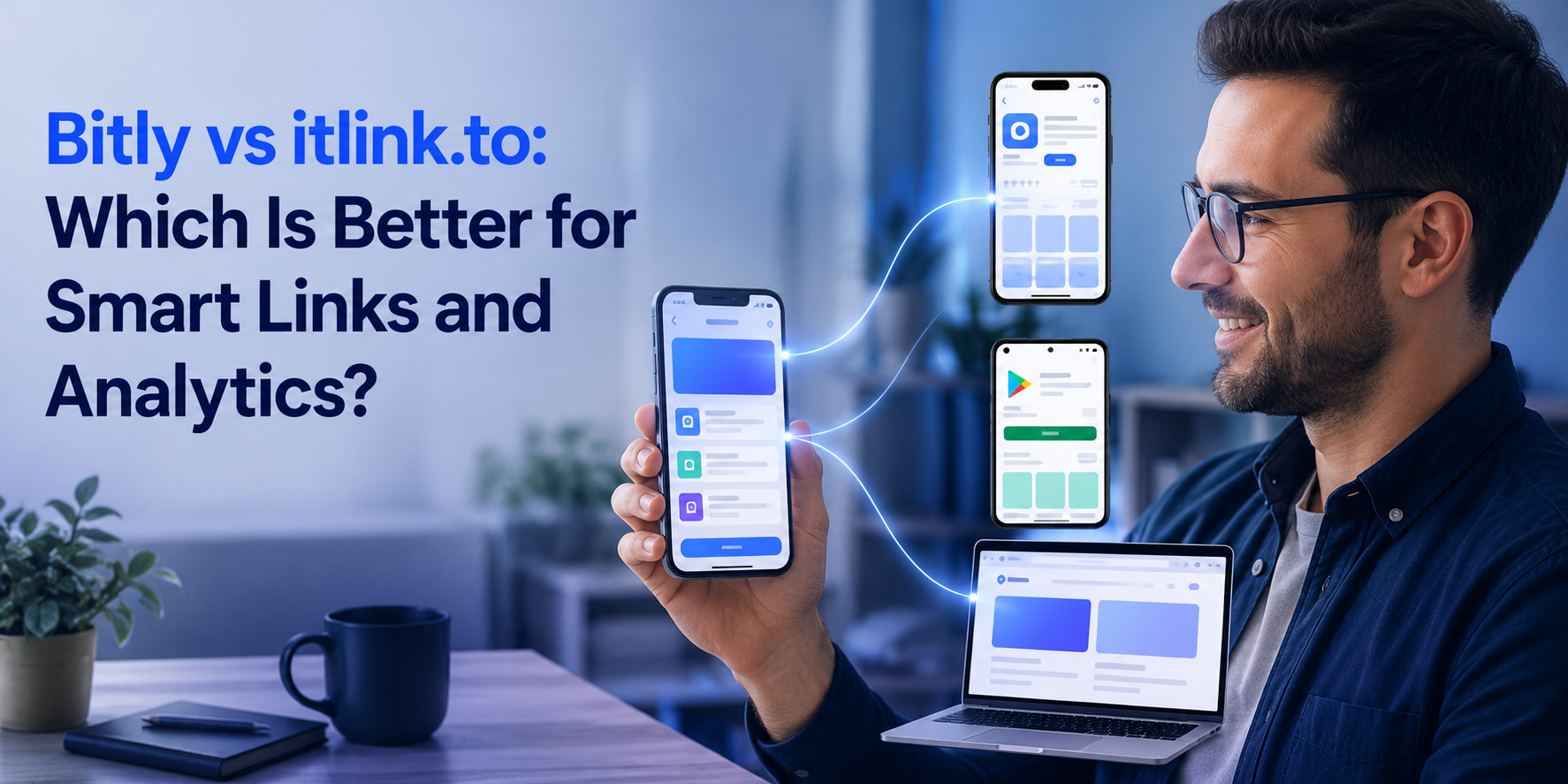
People compare Bitly vs itlink.to for more than short links. They want to know which tool helps their campaign work better after the click. They want to know which tool will help their campaign work better after someone clicks. A short link is useful, but today’s campaigns often need more than that. You may need one link for different devices, one QR code for offline marketing, one bio link for several destinations, or simple analytics that show which channel is actually getting attention. Bitly is already a well-known name in link management, while itlink.to focuses on practical smart routing, clean link pages, QR code use cases, and easy tracking for businesses, creators, and app campaigns. The better choice depends on whether you mainly need a general link shortener or a smarter link experience that helps people reach the right place with less friction.
Bitly vs itlink.to: Start With the Click Journey
The best way to compare Bitly vs itlink.to is to look at the full click journey. Do not judge only the short link. What happens after someone taps your Instagram bio link? What happens after they scan your QR code? What happens after they click your campaign URL? If they land on the wrong app store, the campaign loses momentum. The same thing happens with a messy landing page or outdated link list. Bitly works well when you need a trusted short link and tracking system. itlink.to makes more sense when the link needs to guide users more clearly.
A Short Link Is Not Always a Smart Link
A short link mainly makes a URL cleaner and easier to share, but a smart link helps decide where the user should go. That difference matters when your audience comes from different devices, platforms, and campaign sources. For example, a mobile app campaign should not make users choose between two separate app store links. A creator should not need to change their bio link every time they post a new product, booking page, or promotion. A small business should not print several QR codes when one smart QR journey can feel easier for the customer. If the link only looks clean but still creates confusion after the click, it is not solving the real problem.
Analytics Should Make the Next Campaign Easier

Analytics are not valuable just because they show numbers. They are valuable when they help you understand what to do next. A dashboard full of clicks, locations, referrers, and devices can look impressive, but the real question is simple: which link worked, where did traffic come from, and did users reach the right destination? Bitly is strong for teams that want established link analytics across many campaigns. itlink.to is useful when you want straightforward tracking connected to practical actions, such as seeing how a QR campaign performs, checking whether a short link gets clicks, or understanding which smart route is being used most.
Where Bitly Is Strongest
Bitly is strongest when you want a familiar link management platform with a long-standing reputation. It is a good fit for teams that already manage many short links, need branded domains, want QR code creation, and prefer a platform that many marketers already know. For larger teams, Bitly can feel safe because it is widely recognized and built around structured link management. The possible downside is that a broad platform can sometimes feel heavier than necessary if your main goal is simple smart routing, app store redirection, or a clean campaign link that non-technical people can manage easily.
Where itlink.to Makes More Sense
itlink.to makes more sense when your campaign needs a clear destination flow instead of just a shorter URL. For example, a startup promoting a new app can use one smart link instead of asking users to choose between App Store and Google Play. A creator can use one bio link page instead of constantly replacing links in their profile. A café, salon, gym, or local business can use one QR code on printed material and still track clicks without making the campaign feel complicated. This is where itlink.to feels more direct: it focuses on helping the user get to the right place quickly, while keeping the setup easy for the business. You can explore its smart routing use case here: https://itlink.to/#one-route
Practical Campaign Examples
The difference becomes clearer in real campaigns. If you are sharing a monthly newsletter link, Bitly may be enough because everyone goes to one page. If you are promoting a mobile app, itlink.to may be more useful because users may need different destinations depending on their device. If you are running a QR campaign on flyers, packaging, or posters, the best link is not just the shortest one; it is the one you can track, update, and trust after the material is printed. If you are a creator using Instagram, TikTok, or YouTube, one clean link page can reduce DMs from followers asking where to buy, book, or find the latest offer.
Common Mistakes When Comparing Link Tools
Many people compare link tools by checking feature lists, but that can lead to the wrong choice. A tool may have many features and still not match the way your campaign actually works. Before choosing between Bitly and itlink.to, it is better to check the real use case:
- Do you only need to shorten one URL?
- Do users need different destinations based on device?
- Are you using QR codes in offline marketing?
- Will the destination need to change later?
- Do you need a link-in-bio page with multiple actions?
- Will your team actually understand and use the analytics?
- Is the setup simple enough to repeat for future campaigns?
Which Tool Is Better for Smart Links and Analytics?

For broad link management, Bitly is the stronger known brand. For simple smart routing and practical campaign flows, itlink.to may be the better fit. This does not mean one tool is always better than the other. It means they serve slightly different needs. Bitly is useful when your priority is established short link management, branded links, and larger campaign tracking. itlink.to is useful when your priority is getting users to the correct destination with less confusion, especially for app links, QR codes, bio links, and small business campaigns. If your campaign depends on what happens after the click, smart routing should matter as much as analytics.
Quick Decision Guide
If you are still unsure, choose based on the main problem you are trying to fix. A famous short link tool is not automatically the best tool for every campaign, especially if your audience is moving between Instagram, TikTok, QR codes, mobile devices, and app stores.
- Choose Bitly if you mainly need a well-known short link and link management platform.
- Choose Bitly if your team already uses it and needs a familiar workflow.
- Choose Bitly if branded short links are your main priority.
- Choose itlink.to if you need one smart link for different destinations.
- Choose itlink.to if app store routing is important.
- Choose itlink.to if you want cleaner QR, bio link, and campaign flows.
- Choose itlink.to if you want simple analytics tied to practical marketing actions.
Final Recommendation: Choose the Tool That Reduces Friction
The best answer to Bitly vs itlink.to depends on what kind of friction you are trying to remove. If your main problem is making long URLs shorter and managing many links in a familiar platform, Bitly is a strong option. If your problem is that users click the wrong link, scan the wrong QR code, choose the wrong app store, or get confused by too many destinations, itlink.to is likely the more practical choice. A good smart link should feel simple for the customer and useful for the business. It should send people to the right place, track what happened, and make your next campaign easier to improve. Ready to build a cleaner campaign journey? Try itlink.to and create one smart link that routes users to the right destination and gives you clearer analytics from every click.
References
- Bitly Analytics — Link Tracking and Insights Overview of the analytics dashboard, covering click metrics, geographic data, device identification, and referral tracking.
- itlink.to Smart Routing — One Route Feature Smart link routing solution that dynamically redirects traffic to the App Store, Google Play, or a desktop landing page based on the visitor’s live device OS.