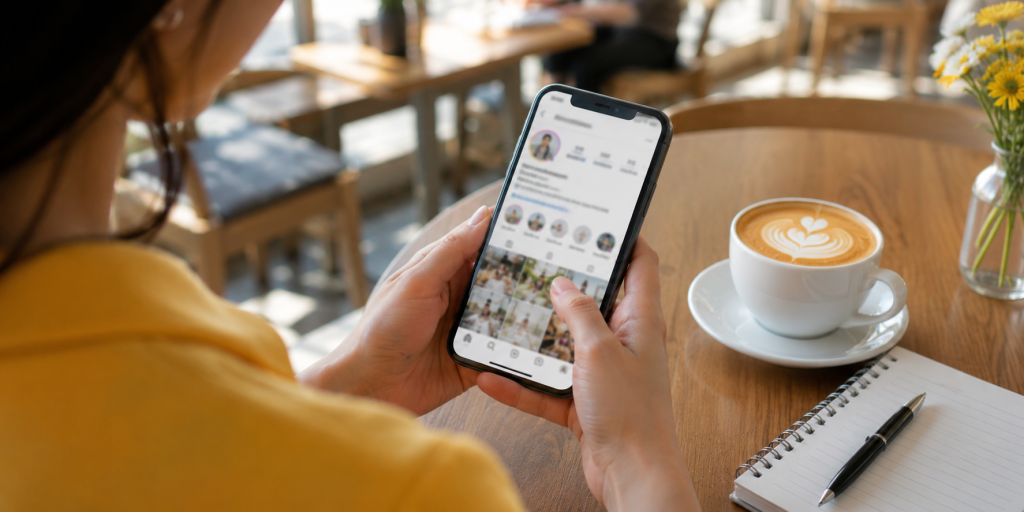
ป้ายกำกับ: link in bio

  • What is itlink.to? URL Shortener, Smart Links, and Link in Bio Explained

    What is itlink.to? URL Shortener, Smart Links, and Link in Bio Explained

    If you’ve ever needed a URL shortener, a smart app link, or a link in bio page, you’ve probably discovered that most tools only solve one of those problems. One platform shortens URLs, another handles app downloads, and another creates link in bio pages. itlink.to was built to bring those common use cases together in one place.

    Whether you’re a creator sharing content, a business running campaigns, or an app developer trying to increase downloads, itlink.to gives you tools to create short links, smart links, and bio pages from a single account. At the moment, all features are available for free, making it easy to get started without worrying about usage limits.

    Why Most People End Up Using Multiple Link Tools

    Many people start with a simple need. Maybe they want a shorter URL for social media. Later they need a bio page for Instagram or TikTok. Then they launch a mobile app and need one link that sends iPhone users to the App Store and Android users to Google Play. Instead of managing everything in one place, they often end up juggling several services. This creates unnecessary complexity and makes campaign tracking harder. itlink.to was designed to simplify that process by combining the most common link management tools into a single platform.

    What Can You Do With itlink.to?

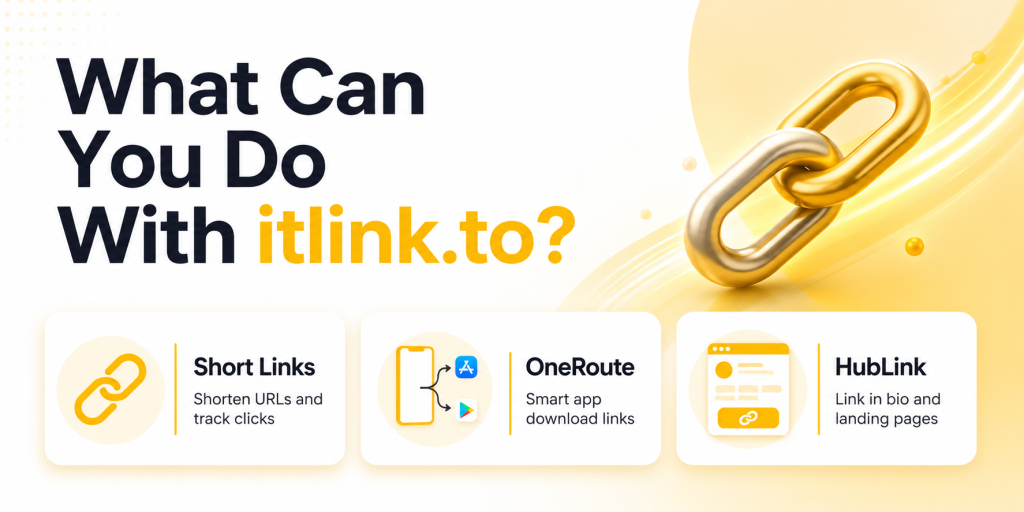
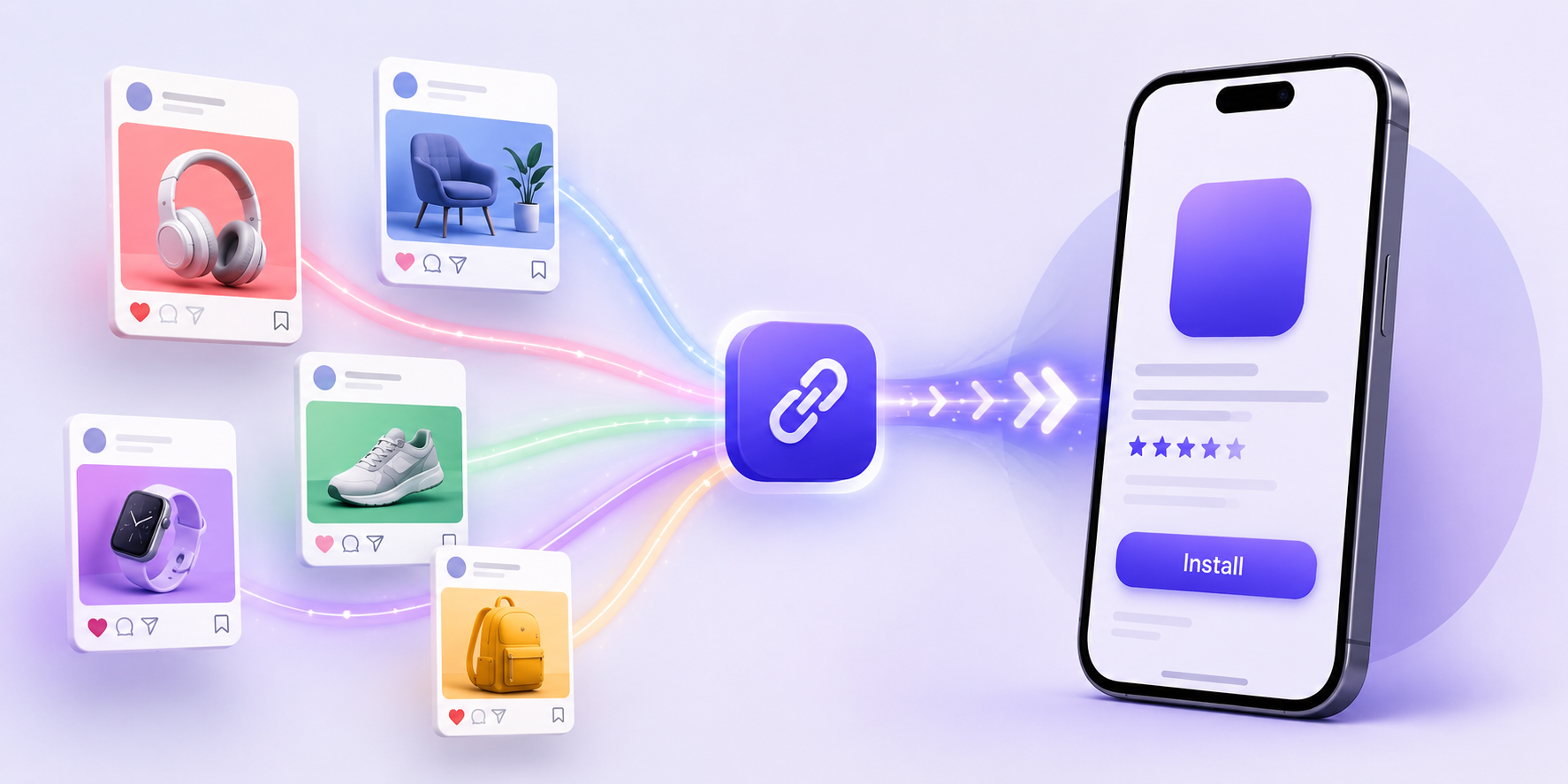
    The platform currently focuses on three core products: Short Links, OneRoute Smart Links, and HubLink bio pages. Each tool solves a different problem, but they can also work together.

    ProductPrimary Use Case
    Short LinksShorten URLs and track clicks
    OneRouteSmart app download links
    HubLinkLink in bio and landing pages

    Most users start with one feature and later discover that the others fit naturally into their marketing workflow.

    How Short Links Work

    Short Links turn long URLs into clean, shareable links. Instead of sending someone a URL filled with tracking parameters, referral codes, or campaign tags, you can create a simple link that’s easier to read and share. Every short link includes analytics, allowing you to track clicks, unique visitors, countries, devices, referrers, and campaign performance.

    For example, instead of sharing a long ecommerce URL with multiple parameters, you can create a short branded link that looks cleaner in social media posts, WhatsApp messages, emails, QR codes, and marketing campaigns.

    How OneRoute Smart Links Work

    OneRoute was created for app marketers. The problem it solves is simple: iPhone users need the App Store, Android users need Google Play, and desktop visitors often need a website or landing page. Sharing separate store links creates friction because users must choose the correct destination themselves.

    OneRoute uses a single smart link. When someone clicks it, the platform automatically routes them to the correct destination based on their device.

    Visitor DeviceDestination
    iPhoneApple App Store
    AndroidGoogle Play Store
    DesktopFallback website
    Other DevicesCustom fallback page

    This makes app promotion easier across social media, influencer campaigns, newsletters, QR codes, and paid advertising.

    How HubLink Works

    HubLink is itlink.to’s link in bio solution. Instead of choosing a single destination, you can create a page containing multiple links and share one URL everywhere. This is especially useful for creators, businesses, podcasts, ecommerce brands, and startups that need to send visitors to several different places.

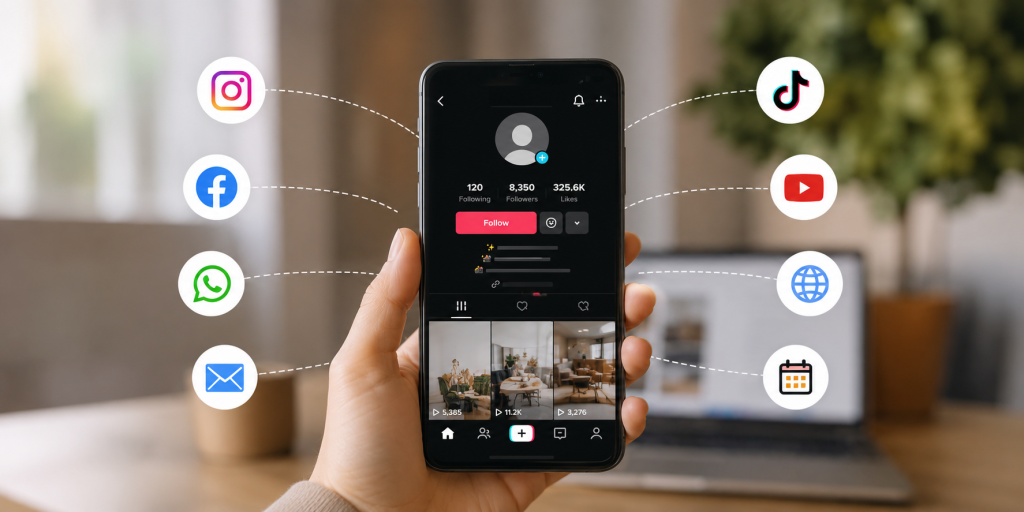
    You can add multiple links, choose your own page alias, customize your profile, and organize important destinations into a single page. Many users place their HubLink URL in Instagram, TikTok, YouTube, X, LinkedIn, and email signatures.

    Which Product Should You Use?

    The answer depends on your goal. If you simply need a shorter URL and click tracking, use Short Links. If you’re promoting a mobile app, use OneRoute. If you need one page containing multiple destinations, use HubLink.

    Your GoalRecommended Tool
    Share a clean URLShort Links
    Promote a mobile appOneRoute
    Create a link in bio pageHubLink
    Run influencer campaignsShort Links or OneRoute
    Manage multiple business linksHubLink

    Many users eventually use all three products together.

    Example: Mobile App Marketing

    Imagine you’re launching a new app. You create a OneRoute link for app downloads. Then you create separate OneRoute links for Instagram, TikTok, YouTube, and influencer campaigns so you can compare traffic sources. Finally, you create a HubLink page containing your app download button, website, support page, and social channels. This setup gives you cleaner marketing campaigns while keeping everything organized.

    Example: Creator or Influencer Setup

    A creator might use HubLink as their main profile URL. Inside that page, they can add links to YouTube videos, affiliate products, newsletters, sponsors, and online courses. For individual campaigns, they can create Short Links to track clicks separately. This makes it easier to understand which content and promotions generate the most engagement.

    Example: Small Business Setup

    A local business could create a HubLink page containing booking links, menus, locations, contact information, and special offers. They can then create Short Links for email campaigns, QR codes, WhatsApp promotions, and seasonal marketing. If they launch an app in the future, OneRoute can handle app downloads without changing the rest of their setup.

    What Analytics Are Available?

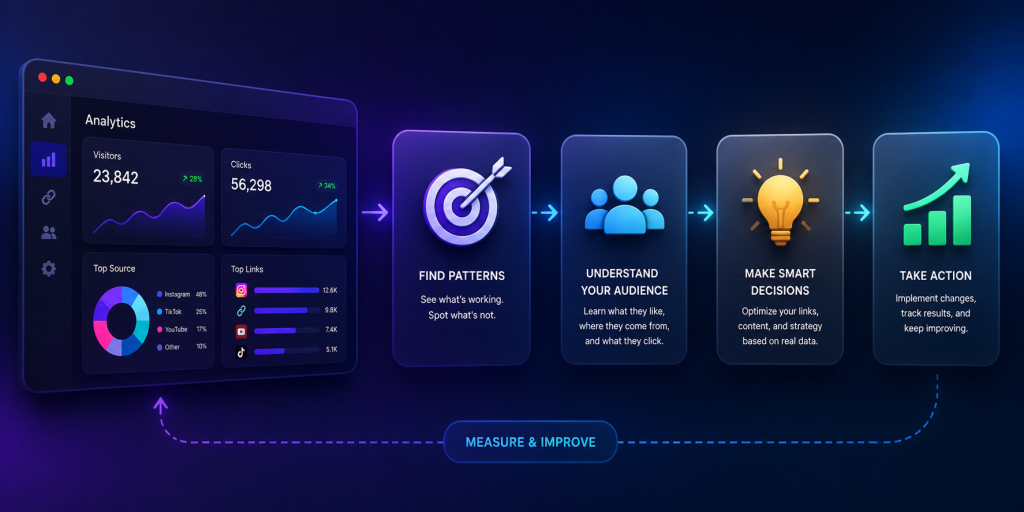
    Every link should tell a story. That’s why itlink.to includes analytics across its products. Users can currently track total clicks, unique clicks, devices, countries, referrers, and campaign activity. This helps marketers understand where visitors come from and which campaigns generate the most interest.

    Analytics Available
    Total Clicks
    Unique Clicks
    Devices
    Countries
    Referrers
    Campaign Performance

    Good analytics make it easier to improve future campaigns instead of relying on guesswork.

    Why Some Teams Use All Three Together

    The products are designed to complement each other. A business might use HubLink as its main profile page, OneRoute for app downloads, and Short Links for campaign tracking. This creates a flexible setup without requiring multiple accounts across different platforms. Because everything lives under one service, managing links becomes simpler as campaigns grow.

    Getting Started With itlink.to

    The easiest way to understand itlink.to is to use it. Create an account, choose the tool that matches your goal, and start building links. Whether you need a URL shortener, a smart app link, or a link in bio page, the platform is designed to help you get started quickly.

    At the time of writing, Short Links, OneRoute, HubLink, analytics, and custom aliases are available for free. That makes it a practical choice for creators, startups, marketers, app developers, and businesses that want professional link tools without upfront costs.

    Create your free account and start using Short Links, OneRoute, and HubLink today

    References

  • Link in Bio Checklist Before Posting on Instagram

    Link in Bio Checklist Before Posting on Instagram

    A link in bio checklist can save you from wasting attention after a post goes live. You may have a great Reel, carousel, Story, or caption, but if the link in your Instagram bio is outdated, confusing, or broken, people will leave before taking action.

    Instagram lets users add links through the profile Links section, and professional accounts can use Insights to understand account and content performance. That makes the bio link one of the most important conversion points on your profile.

    Before you publish your next Instagram post, check the link experience from the visitor’s point of view.

    The Post and the Link Must Tell the Same Story

    The most common link in bio mistake is a mismatch.

    Your post talks about a new product, but your bio link opens a general homepage. Your Reel promotes a free guide, but the first button on your link page says “Book a Call.” Your Story says “grab the template,” but the link page makes people search for it.

    That mismatch kills intent.

    Before posting, ask one question: if someone clicks your profile link because of this post, will they instantly see the thing they came for?

    If the answer is no, fix the link before publishing.

    Put the Most Important Link First

    People do not study link pages. They scan.

    The first visible link should match your current campaign. If your latest post promotes a new offer, that offer should be the first thing people see after tapping your bio link.

    Do not make visitors scroll past old links, secondary offers, or random social buttons before reaching the main action.

    A good rule is simple: the top link should match the CTA in your latest post.

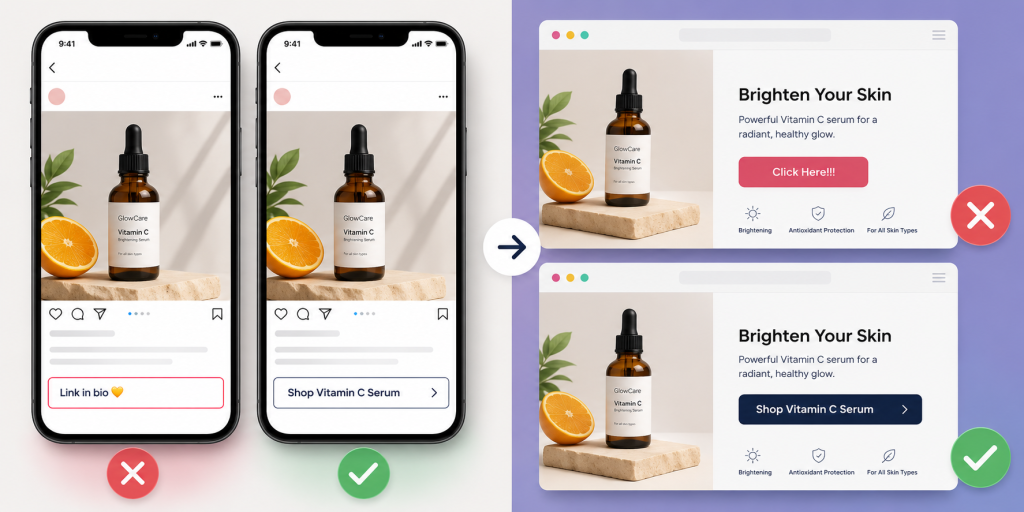
    Make the Button Text Specific, Not Cute

    Generic button text creates hesitation.

    “Click here,” “Learn more,” and “Check this out” are weak because they do not tell people what happens next.

    Use clear action labels instead:

    • Download the Free Checklist
    • Shop the New Collection
    • Book a Demo
    • Join the Newsletter
    • Watch the Full Video
    • Get the Instagram Template
    • Try the Free Tool

    Specific button text improves clarity. It also makes your link page easier to understand in two seconds.

    Test the Link Like a Real Follower

    Do not only preview the link from your laptop.

    Most Instagram clicks happen on mobile, often inside Instagram’s in-app browser. That means your link should be tested from the Instagram app before the post goes live.

    Open your profile. Tap the bio link. Check the page speed, layout, buttons, images, and checkout or signup flow.

    If the page feels slow, crowded, or confusing on your phone, it will feel worse for followers who are less patient.

    Check the Destination After Every Campaign Change

    A bio link is easy to forget because it sits in the same place for weeks or months.

    But campaigns change. Products sell out. Booking pages close. Free downloads move. Launch pages get replaced. Old offers expire.

    Before every important post, check that the destination is still correct.

    This is especially important if your caption says “link in bio.” That phrase creates a promise. The bio link should fulfill it immediately.

    Do Not Send Warm Traffic to a Cold Homepage

    Your Instagram followers already have context. They saw your post, watched your Reel, or read your caption.

    Sending them to a general homepage often resets the conversation.

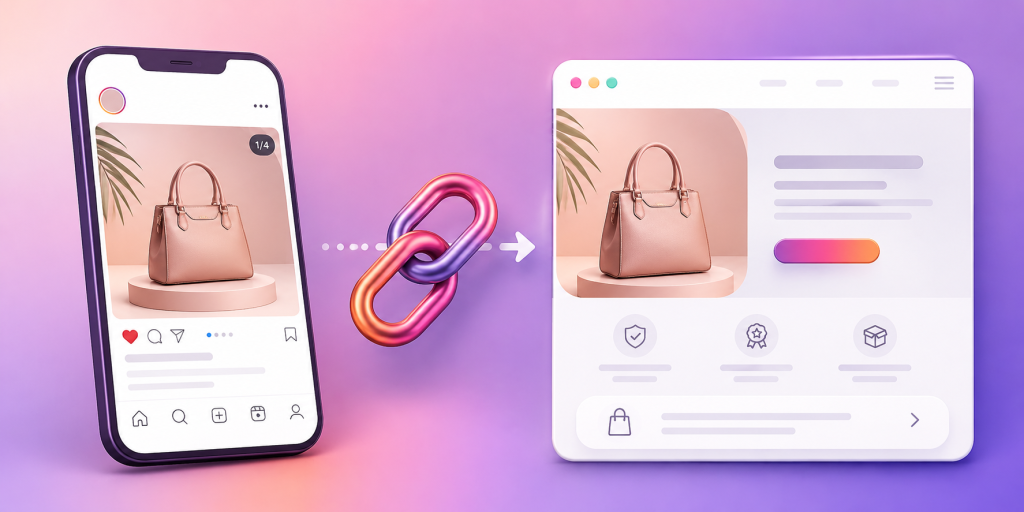
    A better link sends them closer to the action. If the post promotes a product, send them to the product page. If it promotes a newsletter, send them to the signup page. If it promotes an app, send them to the correct app download path.

    A homepage is fine when the goal is broad discovery. But for campaigns, specific pages usually perform better.

    Track the Clicks You Actually Care About

    Instagram Insights can help professional accounts understand performance trends, but your link page or URL tool should also help you see which links people click after they leave Instagram.

    Do not only ask, “Did this post get likes?”

    Ask, “Did this post drive profile visits, bio link taps, and meaningful clicks?”

    For campaigns, create separate links when needed. For example, you may want different links for Instagram bio, Instagram Story, email, and QR codes.

    That helps you see which channel is actually moving people to action.

    Remove Anything That Distracts From the Current Goal

    A link page with too many options can feel like a menu with no recommendation.

    If your current goal is to sell a product, do not surround that product link with ten unrelated buttons. If your goal is newsletter signups, do not bury the signup under social links and old campaigns.

    Before posting, remove or move anything that competes with the main CTA.

    This does not mean your link page must have only one link. It means the current campaign should be obvious.

    Make Sure the Link Looks Trustworthy

    A link in bio should feel like part of your brand.

    Check the URL, title, preview, button labels, colors, and page layout. If the page looks messy or unrelated to your Instagram profile, people may hesitate.

    Trust matters more when you are asking for money, email addresses, bookings, downloads, or app installs.

    A clean link page makes the next step feel safer.

    Final Link in Bio Checklist Before You Post

    Before publishing your Instagram post, run through this quick checklist:

    • Does the first link match the post CTA?
    • Is the destination still active?
    • Does the page load well on mobile?
    • Is the button text clear?
    • Is the main offer visible without scrolling?
    • Are old or expired links removed?
    • Does the page look trustworthy?
    • Are clicks trackable?
    • Did you test the link inside Instagram?
    • Is the next action obvious?

    A good Instagram post earns attention. A good link in bio turns that attention into action.

    Before your next post goes live, make sure your bio link matches the promise you made in the content. Keep the destination clear, the first button relevant, and the next step easy to understand.

    For creators, startups, and brands, the goal is not just to have a link in bio. The goal is to create a simple path from interest to action.

    References

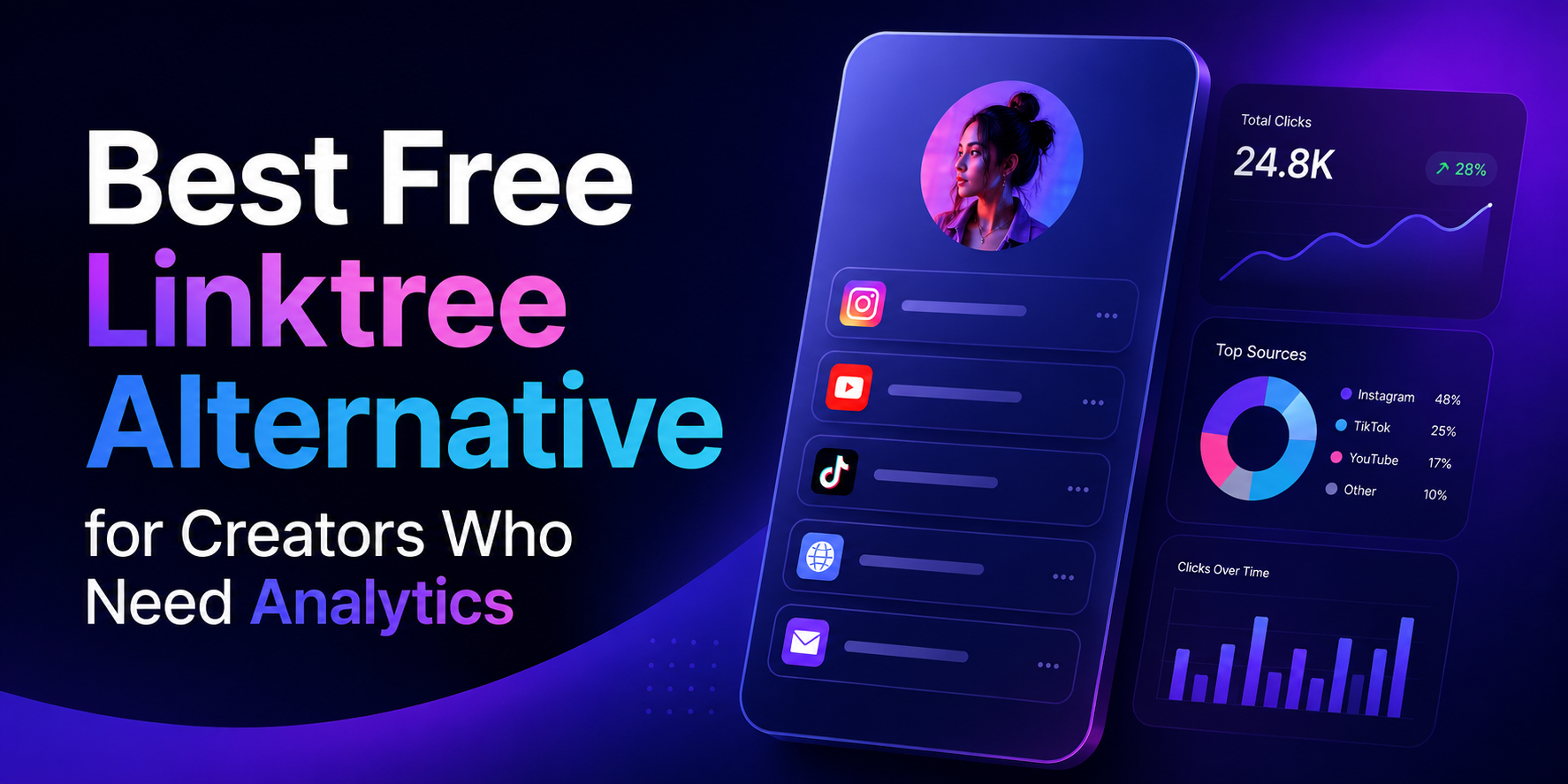
  • Best Free Linktree Alternative for Creators Who Need Analytics

    Best Free Linktree Alternative for Creators Who Need Analytics

    Your bio link is the most valuable piece of digital real estate you control. Every platform, Instagram, TikTok, YouTube, even your email signature, funnels attention toward that single URL. It’s the one place where a curious follower can become a subscriber, a customer, or a fan of something beyond the algorithm’s reach. Which makes it genuinely strange that most creators treat the analytics behind it as an afterthought.

    The problem isn’t a shortage of tools. Link-in-bio platforms have multiplied for years. The problem is that the most important data, who clicked what, where they came from, what device they used, is consistently buried behind a monthly paywall. You get a visitor count on the free plan. Everything that would actually help you make a decision costs extra.

    For creators building real businesses, that’s not a minor inconvenience. It’s a structural blind spot that compounds quietly over time.

    Why a Visitor Count Tells You Almost Nothing

    Picture a realistic scenario: you publish a post on the same day you launch a digital product, release a podcast episode, and promote an affiliate deal. Your bio link pulls in 4,000 visits over 48 hours. That number looks good in a screenshot. It tells you almost nothing useful.

    Did visitors click your product page, or did they go straight to the podcast and skip the sale entirely? Was the affiliate link completely ignored? If you drove that traffic through three different platforms, which one actually converted? Without button-level click data, you cannot answer any of these questions with confidence. You’re left making your next content decision based on feel rather than evidence.

    This is the core failure of surface-level analytics. A single vanity metric gives you the illusion of insight while hiding every data point that would actually change your behavior. Creators who fix this problem improve faster because every piece of content becomes a feedback loop. Creators who don’t keep running the same experiments, hoping something eventually sticks.

    What Paywalled Analytics Actually Cost You

    The pricing model most link-in-bio platforms use is straightforward: get you in for free, then lock the useful features behind a subscription once you’re dependent on the tool. Entry-level paid tiers typically run between $18 and $36 per month. That might sound manageable in isolation, but creators rarely use just one platform. Stack a bio link subscription on top of an email tool, a scheduling app, and a course platform and you’re looking at several hundred dollars a month in software overhead before you’ve earned a dollar.

    More importantly, the features being paywalled aren’t advanced enterprise capabilities. Knowing which button your audience clicked is not a sophisticated request. Seeing a geographic breakdown of your traffic is not a premium insight. These are basic operational data points that any creator making decisions about their business should have access to by default. When platforms treat them as upsells, they’re not offering a premium experience. They’re charging you to see information about your own audience that you already earned.

    The Five Analytics That Actually Drive Decisions

    When evaluating any free Linktree alternative, most creators focus on design flexibility or the number of links allowed. Both are largely irrelevant if the tracking underneath is weak. These are the five data points that materially change how you run your creator business.

    • Button-level click tracking. Aggregate page views are decorative. What you need is a per-link breakdown showing exactly which buttons are being clicked and which are being ignored. This tells you which offers resonate, which calls to action are failing, and where to focus your next promotion.
    • Unique versus total clicks. Total click counts can be inflated by a small number of people clicking repeatedly. Unique click counts show you how many individual people engaged with a specific link, which is the number that actually reflects genuine audience interest.
    • Traffic source attribution. There is a meaningful difference between a click that originated inside the Instagram app and one that came from a YouTube comment, a newsletter, or an external blog post. Source data tells you which platforms are earning their time investment and which ones are producing impressions without conversions.
    • Geographic data. City and country level breakdowns affect pricing decisions, event planning, brand partnership pitches, and publish timing. If a significant portion of your audience is concentrated in a specific region, that information should be actively shaping your strategy.
    • Device and browser reporting. If 80% of your clicks are coming from mobile in-app browsers, your external pages need to load instantly on a small screen. Device data lets you stop designing for how you browse and start designing for how your audience actually behaves.

    The Technical Mistakes That Break Your Tracking

    Choosing the wrong platform doesn’t just limit your visibility. It can actively corrupt the data you’re collecting elsewhere.

    The first issue is redirect stripping. Some bio link platforms mask outbound URLs or strip tracking headers when they forward a user to your destination. The result is that your website analytics logs that visit as direct traffic rather than attributing it to social media. Your social channels look less effective than they are, your attribution model breaks, and any return on investment calculation you run becomes unreliable.

    The second is link shortener chaining. Routing a bio tool redirect through an additional URL shortener creates two sequential redirects before a user reaches your page. Beyond the delay in load time, this frequently breaks UTM parameters and can trigger security warnings in mobile browsers, particularly on iOS. Always link directly to your final destination URL without intermediary shorteners.

    How to Use Your Data Once You Have It

    Access to analytics is only the first step. The creators who pull ahead are the ones who build a consistent habit around reviewing and acting on that data.

    Every two weeks, pull your click data and remove any link that hasn’t generated meaningful engagement in the past 30 days. A focused page with four strong links consistently outperforms a crowded page with twelve because too many options produce decision paralysis. Your audience is more likely to click something when the choice is clear.

    After each significant post or campaign, trace where the traffic spike originated before you lose the context. If a specific platform drove a disproportionate share of clicks, weight your next content batch accordingly. If a traffic source you invested heavily in produced nothing, that’s equally useful information.

    Reorder your links based on performance data, not instinct. Most visitors won’t scroll far, so your highest-converting link belongs at the top. If your second link is consistently outperforming your first, swap them and monitor the change. Small structural adjustments validated by data produce compounding improvements over time.

    What to Look for in a Free Platform

    The market for link-in-bio tools has expanded considerably, which means the quality range is wide.

    Data retention is the most underrated factor. Some platforms on free tiers delete or hide historical data after seven days. Others give you full access going back to the day you created your account. Comparing your current month against the same period last quarter is only possible if that data still exists.

    UTM parameter integrity is non-negotiable if you run any external analytics. Confirm that the platform passes your tracking tags through cleanly on redirect rather than dropping them. Most won’t tell you they strip parameters so you have to test it yourself by clicking a tagged link and checking whether the parameters appear in your destination analytics.

    Transparency around redirects is worth checking as well. Platforms that use masked redirects sometimes create issues with browser security warnings and can affect how link previews render when shared.

    Why Creators Are Switching to itlink.to

    Most creators who move to a platform with real analytics describe the same first week: the data is disorienting because it reveals how much guesswork was previously involved. Links you assumed were performing well turn out to have single-digit click rates. Traffic sources you deprioritized turn out to be driving the majority of your conversions. The picture that emerges rarely matches the assumptions you were working from.

    That recalibration is valuable precisely because it’s uncomfortable. It means your next decisions are grounded in what your audience actually does rather than what you assumed they would do.

    itlink.to gives you button-level click tracking, geographic breakdowns, traffic source attribution, and device reporting on its free plan without requiring a credit card. If you’re currently making content and business decisions without that visibility, setting up a page takes a few minutes and the difference in clarity is immediate.

    Start tracking what your audience actually clicks. Build your free page at itlink.to.

    References

  • How to Share Many Links With One Simple URL

    How to Share Many Links With One Simple URL

    When you need to share multiple links, sending them one by one can quickly look messy. A customer may need your booking page, price list, WhatsApp contact, Instagram profile, latest offer, and website. A follower may want your product link, YouTube video, newsletter, and course page. If you send every URL separately, the message becomes hard to read and easy to ignore.

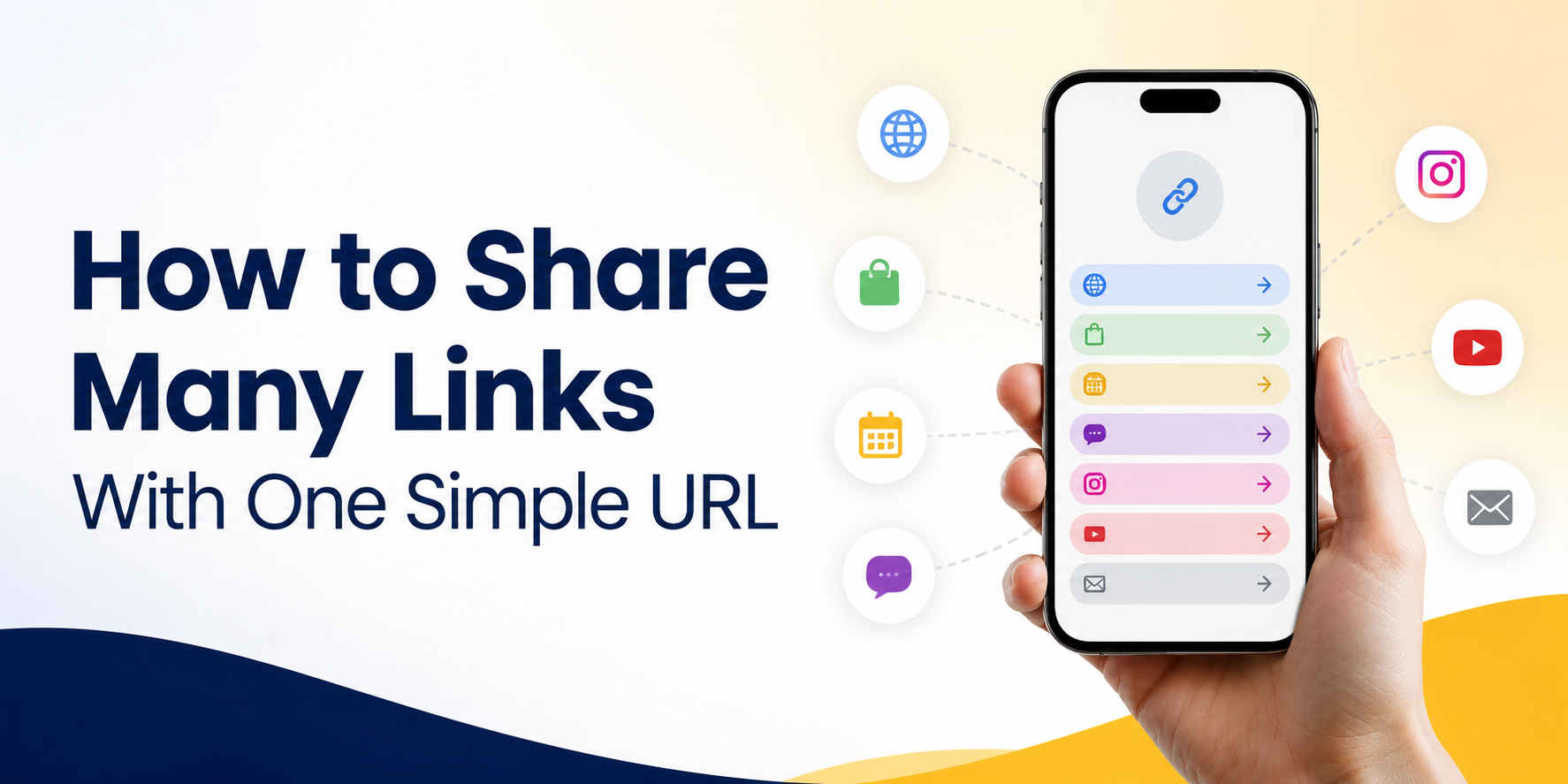
    A better way is to use one simple URL that opens a clean page containing all your important links. Instead of asking people to choose from a long list of raw URLs, you give them one easy link and let them pick the next step from a simple menu.

    This is useful for small businesses, creators, coaches, salons, restaurants, freelancers, app owners, and anyone who promotes different links across social media, chat apps, QR codes, or printed materials.

    Why Too Many Separate Links Create Friction

    Every extra link adds a small decision for the reader. If you send five different URLs in one message, people must stop and think: Which one should I open first? Is this the booking link or the product link? Is this the latest offer or an old page?

    That small confusion can reduce clicks. It can also make your brand look less organized, even if your service is good. People are busy, especially on mobile. They often open links while scrolling, chatting, walking, or comparing options quickly.

    A long block of links also looks less trustworthy. Raw URLs can feel random, especially if they are long or come from different platforms. One clean URL feels easier to understand and easier to share.

    How to Share Multiple Links With One Simple URL

    The easiest way to share multiple links is to create a link hub. A link hub is a simple page that contains your most important destinations in one place. You share one URL, and visitors can choose where they want to go next.

    For example, instead of sharing your website, booking form, LINE contact, Instagram, and promotion link separately, you place them all on one page. Then you use that one page in your Instagram bio, TikTok bio, WhatsApp messages, QR code, email signature, and printed flyer.

    The main benefit is control. You can keep the same main URL while updating the links behind it. If your promotion changes, you update the link hub. If your booking page changes, you update the button. Your public URL can stay the same.

    Practical Examples for Small Businesses and Creators

    A beauty salon can use one URL to show appointment booking, service prices, Google Maps location, customer reviews, and LINE contact. Instead of putting all of these links in a social caption, the salon can simply say, “Book or contact us here,” followed by one clean URL.

    A fitness coach can use one URL for class booking, personal training packages, free workout guides, Instagram, and WhatsApp. This is easier than sending a different link every time someone asks for information.

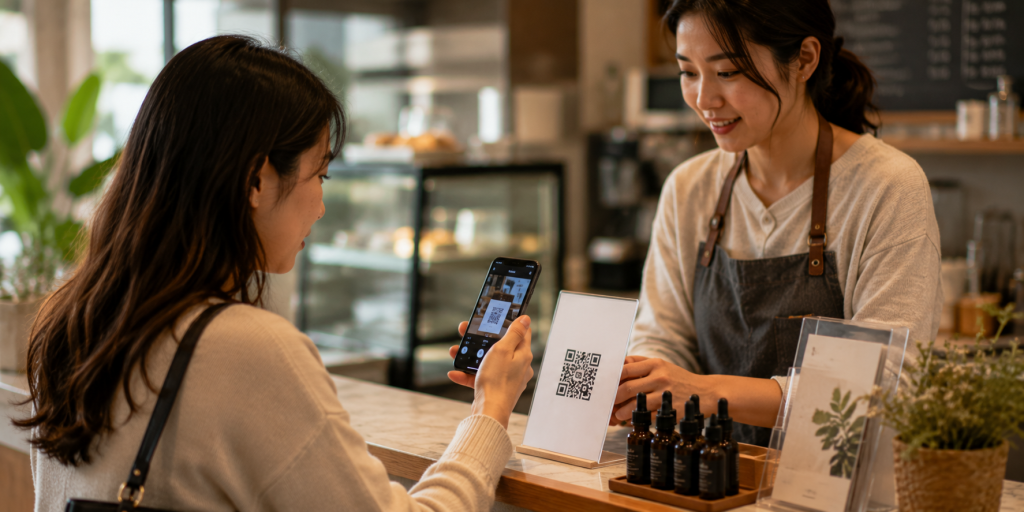
    A restaurant can place one QR code on a table or poster. That one URL can include the menu, delivery app links, reservation page, location, and social media profile.

    A creator can use one URL in their bio to share product recommendations, affiliate links, latest videos, paid resources, and newsletter signup. When a new campaign starts, they only need to update the link hub, not every old post.

    What Your One URL Should Include

    A good link hub should not contain every link you have. It should contain the links that help people take action. The goal is not to create a storage page. The goal is to guide visitors clearly.

    Useful links may include:

    • Booking or appointment page
    • Product or service page
    • WhatsApp, LINE, or contact link
    • Current promotion or campaign
    • Website or landing page
    • App Store or Google Play link
    • Social media profiles
    • Newsletter signup
    • Customer reviews or portfolio

    Put the most important action near the top. If your goal is bookings, make booking the first button. If your goal is sales, place your product or offer first. If people usually ask questions before buying, make your contact link easy to find.

    Common Mistakes When Sharing Multiple Links

    One common mistake is adding too many buttons. When visitors see too many choices, they may not click anything. A simple page with five strong links is often better than a crowded page with twenty weak links.

    Another mistake is using unclear labels. “Click here” does not tell people what will happen. Use direct labels such as “Book an Appointment,” “View Menu,” “Contact on WhatsApp,” “Download the App,” or “See Pricing.”

    Some people also forget to remove old campaign links. If visitors click an expired offer, broken page, or outdated promotion, trust drops quickly. Your link hub should stay current.

    A final mistake is treating the page like a technical dashboard. Most visitors do not care about the tool behind the link. They only care whether they can quickly find what they need.

    Where to Use Your Simple URL

    Once you create one clean URL, use it across the places where people already discover you. This makes your marketing easier to manage and more consistent.

    Good places to use it include:

    • Instagram bio
    • TikTok bio
    • Facebook page
    • YouTube description
    • WhatsApp messages
    • LINE profile
    • Email signature
    • QR code
    • Business card
    • Event poster
    • Product packaging
    • Printed flyer

    Using the same URL across channels also reduces maintenance. You do not need to change every old post, poster, or message when one destination changes. You only update the links inside the hub.

    Why This Works Better Than Sending a Long Message

    Long messages often fail because people scan instead of reading carefully. When someone receives a message full of links, they may postpone the decision or ignore it completely.

    One simple URL reduces that problem. It gives the reader a clear first step. They do not need to understand everything immediately. They only need to click one link.

    After they open the page, the options are easier to read because each destination has a clear label. This creates a better mobile experience, especially for people coming from Instagram, TikTok, WhatsApp, LINE, or a QR code scan.

    It also helps your brand look more professional. A clean link hub feels intentional. It shows that you have organized the customer journey instead of pushing random links at people.

    How to Keep Your Link Hub Simple and Effective

    Start with your main goal. Do you want more bookings, more sales, more downloads, more followers, or more messages? Your first button should support that goal.

    Then think about what people need before taking action. If they need trust, add reviews or examples. If they need details, add pricing or service information. If they need quick help, add a chat link.

    Keep the page short. Use clear wording. Review it regularly. Remove links that no longer matter. Move seasonal campaigns up when they are active, then replace them when the campaign ends.

    You can also use different versions for different use cases. For example, one page for your main profile, one page for an event campaign, and one page for a product launch. But each page should still feel focused.

    Start With a Free Link Hub

    If you want to share multiple links without making your audience deal with a messy list of URLs, a simple link hub is the easiest place to start. You can use it for social media bios, QR codes, WhatsApp messages, LINE, email signatures, posters, and small business campaigns.

    itlink.to lets you create a free link hub so you can place your important links behind one clean URL. Add your booking page, product link, contact link, social profiles, or campaign links, then share one simple URL everywhere.

    The goal is simple: make it easier for people to find the right next step. When your links are organized, your audience does not need to guess. They can click once, choose what they need, and move forward.

    Create your free link hub today and start sharing multiple links with one simple URL.

    References

  • How to Create a Free Link in Bio Page for Your Small Business

    How to Create a Free Link in Bio Page for Your Small Business

    A free link in bio page is one of the simplest ways for a small business to turn social media attention into real action. Instead of changing your Instagram, TikTok, Facebook, or Google Business Profile link every time you have a new offer, you can send customers to one clean page that contains your most important links.

    For small businesses, this matters because customers rarely follow a perfect path. One person may want to book an appointment. Another may want to see your menu. Someone else may want WhatsApp, LINE, a product catalog, directions, or a discount page. If your bio only points to one destination, you may lose people who were ready to take the next step.

    A good link in bio page does not need to be complicated. It should help people quickly understand what to do, where to click, and how to contact your business.

    Why Small Businesses Need One Clear Bio Link

    Most small businesses promote more than one thing at the same time. A café may want to share its menu, delivery link, location, and seasonal promotion. A beauty salon may need booking, price list, Instagram portfolio, and WhatsApp contact. A coach may want to share a course, consultation form, YouTube channel, and testimonials.

    The problem is that many social profiles give you limited space for links. Even when a platform allows multiple links, the experience can still feel messy if the customer has to guess which link matters most.

    One clear bio link gives your business a small landing page that works like a front desk. It does not replace your website. It organizes the most useful actions in one place. When someone taps your bio, they should immediately know whether to buy, book, message, visit, or learn more.

    This is especially useful for businesses that do not have a full website yet. Instead of waiting until everything is perfect, you can create a simple page today and update it whenever your offers change.

    Choose the Right Focus Before You Add Links

    Before creating your page, decide what the page is supposed to help people do. Many small businesses make the mistake of adding every possible link because the tool allows it. More links do not always mean better results.

    Your link in bio page should support your main business goal. If your goal is bookings, the booking button should be near the top. If your goal is product sales, your shop or best-selling product should be easy to find. If your goal is local visits, your map, opening hours, and contact button should be obvious.

    Think of your page like a shop window. You do not need to show every item you have. You need to show the right next step for the person who just discovered you.

    A simple rule is to start with one primary action, then add a few supporting links. For example, a bakery may put “Order Cakes” first, then add “View Menu,” “Find Us on Maps,” and “Message Us.” A fitness coach may put “Book Free Consultation” first, then add “Programs,” “Client Results,” and “Instagram.”

    What to Include on a Free Link in Bio Page

    Your page should be short enough to scan, but complete enough to answer the customer’s next question. The best structure depends on your business, but most small businesses can start with these essentials:

    • Your main offer, such as booking, ordering, signup, or product catalog
    • A direct contact link, such as WhatsApp, LINE, Messenger, or email
    • Your location or Google Business Profile if you serve local customers
    • Your latest promotion, campaign, menu, event, or limited-time offer
    • Social proof, such as reviews, testimonials, portfolio, or before-and-after examples
    • Your main social channels if customers may want to follow you elsewhere

    Do not treat every link as equally important. Put the highest-value action first. Customers are often distracted when they tap your bio link. They may be standing in a store, watching a Reel, checking your profile after an ad, or comparing you with another business. The faster they find the right action, the better.

    How to Create a Free Link in Bio Page

    Start by collecting the links your customers actually need. Do not begin with design. Begin with customer intent. Ask yourself: “If someone discovers my business today, what are the top three things they may want to do?”

    Next, create your link in bio page and add those links in order of importance. Use clear button labels. Instead of “Click Here,” write “Book a Table,” “View Price List,” “Order on LINE,” “See Cake Menu,” or “Get a Quote.” Clear labels reduce confusion and make the page feel more trustworthy.

    Then add your page URL to your social profiles. Instagram lets users add links through the profile editing flow, and TikTok Business Accounts can add a website link to the profile. For local businesses, you can also add your website or main customer link to your Google Business Profile.

    After publishing, test the page on your phone. Open it from Instagram, TikTok, and any other platform where customers will find you. Check that the buttons are easy to tap, the order makes sense, and the page loads correctly.

    Practical Small Business Examples

    A link in bio page becomes more useful when it is built around a real business situation, not just a generic list of links.

    For a restaurant, the page may include menu, reservation, delivery app, Google Maps, opening hours, and private event inquiry. The most important link may change depending on the season. During lunch hours, the delivery link may be most important. During holidays, the reservation or catering link may deserve the top position.

    For a salon, the page may include appointment booking, service menu, stylist portfolio, location, WhatsApp, and current promotion. The top link should usually be booking, because people who visit a salon’s profile often want to check availability or prices.

    For a coach, consultant, or service provider, the page may include a consultation form, service packages, client results, free resource, calendar booking, and contact link. Here, the page should build trust before asking for a commitment.

    For a small online shop, the page may include best sellers, new arrivals, shipping policy, customer reviews, size guide, and support contact. Instead of sending people to a large homepage, the page can guide them toward the products they are most likely to buy.

    Common Mistakes That Make Bio Links Perform Poorly

    A free link in bio page can work well, but only if it is easy for customers to use. Many pages fail because they feel like a random collection of links rather than a clear path.

    Common mistakes include:

    • Adding too many buttons with no priority
    • Using vague labels like “Website,” “More,” or “Info”
    • Sending people to outdated promotions or broken pages
    • Placing the most important action too low on the page
    • Forgetting mobile users and making links hard to tap
    • Using inconsistent branding that makes customers wonder if they are in the right place
    • Not checking whether people are clicking the page after you publish it

    The biggest mistake is thinking the page is finished after you create it. A link in bio page should change as your business changes. If your promotion ends, remove it. If a new service becomes your priority, move it higher. If customers keep asking the same question, add a link that answers it.

    Make the Page Feel Trustworthy

    Customers are careful before they click, buy, book, or send a message. Your link in bio page should feel like it belongs to your business.

    Use the same business name, tone, and visual style that people already see on your social profiles. If your Instagram is clean and premium, your page should not feel messy. If your business is friendly and casual, your labels can sound warm and direct.

    Trust also comes from clarity. A button that says “Book a Free Consultation” is stronger than “Learn More.” A button that says “Message Us on WhatsApp” is stronger than “Contact.” The clearer the action, the easier it is for customers to feel confident.

    For local businesses, location details are important. People may want to know whether you are nearby before they contact you. For service businesses, proof matters. Add reviews, case studies, client examples, or portfolio links when they help customers make a decision.

    Where to Share Your Link in Bio Page

    Your bio link should not live only on Instagram. Once you have one clean page, you can use it across many customer touchpoints.

    Add it to Instagram, TikTok, Facebook, YouTube, Threads, Google Business Profile, email signature, WhatsApp auto-reply, LINE profile, business cards, flyers, QR codes, and event materials. This makes your marketing easier because you do not need to promote different links everywhere.

    This is also why a free linktree alternative can be useful for small businesses. The goal is not just to copy Linktree. The goal is to have one simple page that you control, update, and use across campaigns.

    For example, if you run a weekend pop-up event, you can update your page with event location, menu, booking form, and promotion. After the event, you can replace those links with your regular ordering or contact links without changing the link on every social profile.

    Why a Free Link in Bio Page Is a Smart First Step

    A free link in bio page is not just a convenience. It is a practical marketing tool for small businesses that need to move faster.

    You may not have time to build a full website, write many landing pages, or manage complex campaigns. But you still need one place where customers can find what matters. A good bio link page helps you organize your offers, reduce customer confusion, and make your social traffic more useful.

    This is where HubLink by itlink.to can help. You can create a simple link in bio page for your business, add your important links, and share one clean URL across your social profiles and campaigns. It is a practical option if you want a free linktree alternative without making the setup feel complicated.

    Start simple. Add the links customers need most. Put your strongest action first. Test everything on mobile. Then improve the page over time based on what your customers actually click.

    Create your free link in bio page with itlink.to HubLink and give your small business one clean place to send customers from every social profile.

    References

  • Multiple Links in Instagram Bio Without Linktree

    Multiple Links in Instagram Bio Without Linktree

    If you are trying to add multiple links in Instagram bio, you are probably facing a simple but frustrating problem: one profile, many destinations. You may need to share your shop, latest post, booking page, YouTube video, WhatsApp contact, newsletter, app download page, or campaign landing page at the same time.

    Instagram gives creators and businesses more link flexibility than before, but a clean link-in-bio page is still often the better solution when you want control, clarity, and a more professional experience. Instead of changing your bio link every time you post something new, you can send people to one simple page that organizes all your important links in one place.

    Why Instagram Bio Links Matter More Than They Look

    Your Instagram bio link is small, but it often carries serious business value. It is the bridge between attention and action. Someone watches your Reel, reads your caption, checks your profile, and then decides whether to click.

    That click may lead to a sale, signup, download, booking, message, or content view. If the link is confusing, outdated, or too crowded, the visitor may leave before taking action. This is why your bio link should not be treated like a random URL. It should work like a simple landing page with a clear purpose.

    For creators, Instagram bio links can send followers to new content, affiliate offers, digital products, media kits, or community pages. For businesses, they can support campaigns, product launches, lead generation, and customer support. The goal is not just to show many links. The goal is to help people choose the right next step quickly.

    The Real Problem Is Not Linktree, It Is Link Clutter

    Many people search for a Linktree alternative because they think the tool is the problem. Sometimes it is. But often, the real problem is link clutter.

    A link-in-bio page can become messy when every link has the same importance. Visitors see too many buttons, vague labels, old promotions, and repeated destinations. Instead of helping people decide, the page creates more friction.

    For example, a creator might add “My Website,” “New Video,” “Shop,” “Course,” “Booking,” “Podcast,” “Newsletter,” “TikTok,” and “Contact Me” all at once. Technically, that is multiple links. Practically, it may be too much.

    A better approach is to organize links based on what your audience wants right now. If your latest Reel promotes a free guide, that guide should be near the top. If your main business goal is booking calls, the booking link should be obvious. If an old campaign is no longer active, remove it or move it lower.

    A Better Way to Share Multiple Links Without Linktree

    You do not need to use Linktree specifically to share multiple links from Instagram. What you need is a simple link-in-bio page that acts as a clean menu for your audience.

    The best setup is usually one short bio link that opens a mobile-friendly page. That page should include your most important destinations, written in clear language. The visitor should immediately understand where to click.

    For example, instead of putting five separate URLs in captions or constantly changing your profile link, you can create one link-in-bio page with buttons such as “Book a Call,” “Shop New Products,” “Read the Latest Article,” “Download the App,” and “Contact on WhatsApp.”

    This keeps your Instagram profile clean while still giving your audience options. It also makes your content easier to manage because you only need to update one page instead of repeatedly editing your Instagram bio.

    What to Include on Your Link-in-Bio Page

    A good link-in-bio page should be simple, useful, and focused. It should not feel like a full website. It should feel like a clear shortcut to your most important actions.

    Include only links that support your current goals:

    • Main offer: product, service, course, app, booking page, or campaign page.
    • Contact option: WhatsApp, LINE, email, contact form, or booking link.
    • Fresh content: latest blog post, video, podcast episode, or campaign.
    • Trust link: portfolio, reviews, testimonials, case studies, or media kit.
    • Social or community link: newsletter, group, Discord, Telegram, or other platform.

    The order matters. Put the most important link first. If your audience came from a specific post or Reel, the page should match what they expected to find.

    Practical Examples for Creators, Businesses, and Campaigns

    A creator may use one Instagram bio link to share a new YouTube video, a brand collaboration, an affiliate product, and a media kit. In this case, the page should not look like a random list. The top link might be “Watch My Latest Video,” followed by “Shop My Favorite Tools,” then “Work With Me.”

    A small business may use a link-in-bio page for product categories, delivery information, customer chat, and promotions. For example, a café could link to its menu, Google Maps location, LINE order form, and latest seasonal offer.

    A mobile app team may use the bio link to send users to the correct app download destination, a feature page, a launch campaign, and support. If the app is being promoted through Instagram Reels, the first link should match the campaign message.

    A consultant or service provider may focus on booking calls, case studies, free resources, and testimonials. In this case, fewer links may perform better because the main goal is lead generation.

    Common Mistakes That Make Bio Links Perform Poorly

    A link-in-bio page should make decisions easier. When it creates confusion, users stop clicking. Many pages fail not because the offer is bad, but because the structure is unclear.

    Avoid these common mistakes:

    • Using vague button text like “Click Here” or “Learn More.”
    • Adding too many links with no clear priority.
    • Keeping expired campaigns or old offers near the top.
    • Sending users to pages that are slow, broken, or not mobile-friendly.
    • Making the first link different from what your latest Instagram content promised.
    • Using long URLs that look messy or unprofessional.
    • Forgetting to test the bio link after updating it.

    The fix is simple: keep the page clean, update it regularly, and write button labels that tell people exactly what they will get.

    When Instagram’s Native Links Are Enough

    Instagram allows users to add links directly to their profile, which can be enough for very simple needs. If you only need to share a website, one product page, or one contact link, you may not need a full link-in-bio page.

    However, native profile links can become limiting when you want better presentation, clearer grouping, campaign-specific organization, or a branded experience. A plain list of links may work, but it does not always guide users toward the action that matters most.

    If your Instagram profile supports real business goals, a dedicated link-in-bio page usually gives you more control. You can arrange links, update campaigns, create a cleaner visitor journey, and make the page feel more aligned with your brand.

    How to Organize Your Bio Links for More Clicks

    Start with the action you care about most. Do not begin by asking, “How many links can I add?” Ask, “What should people do first?”

    If your priority is sales, place your shop or product link first. If your priority is appointments, place your booking link first. If your priority is audience growth, place your newsletter or community link first. If your priority is content discovery, place your latest article or video first.

    Use clear labels. “Book a Free Consultation” is better than “Services.” “Download the App” is better than “Our Platform.” “Shop New Arrivals” is better than “Products.”

    You can also rotate the top link based on your latest campaign. For example, during a product launch, the launch page should be first. After the launch, you can move your evergreen shop or booking page back to the top.

    Create Multiple Links in Instagram Bio With a Cleaner Setup

    The best way to manage multiple links in Instagram bio is to use one clean page that organizes your most important destinations. It should be easy to scan, fast to open, and simple to update.

    This is where a link-in-bio tool becomes useful. Instead of sending people to a messy list or constantly editing your profile, you can create one page for your current offers, content, contact options, and campaigns.

    With HubLink by itlink.to, you can create a simple link-in-bio page for Instagram and send visitors to the right places from one clean link: https://itlink.to/#hub-link

    Use your Instagram bio link as a focused path, not a storage box for every URL you have. Start with your most important action, keep the page clean, and update it whenever your campaign changes.

    References